
Last updated November 23, 2026
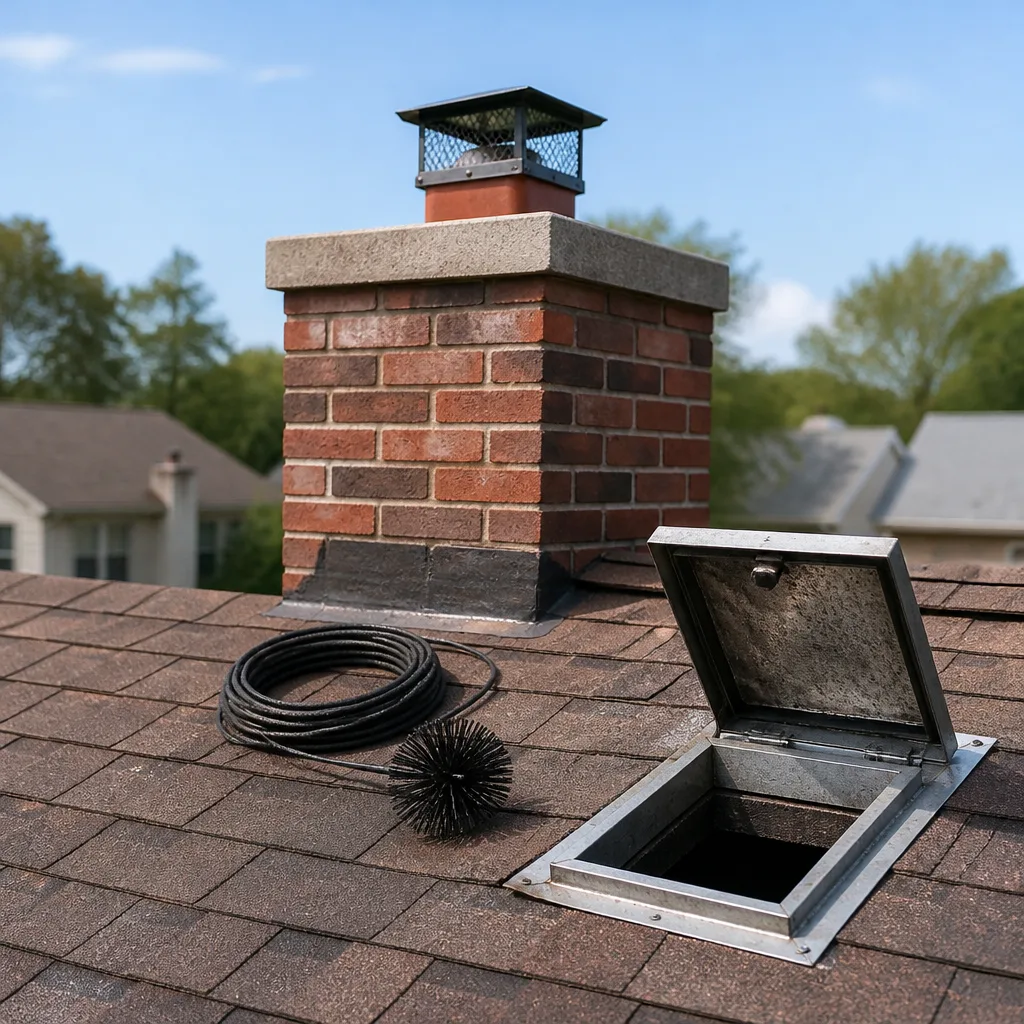 Sweep & inspection
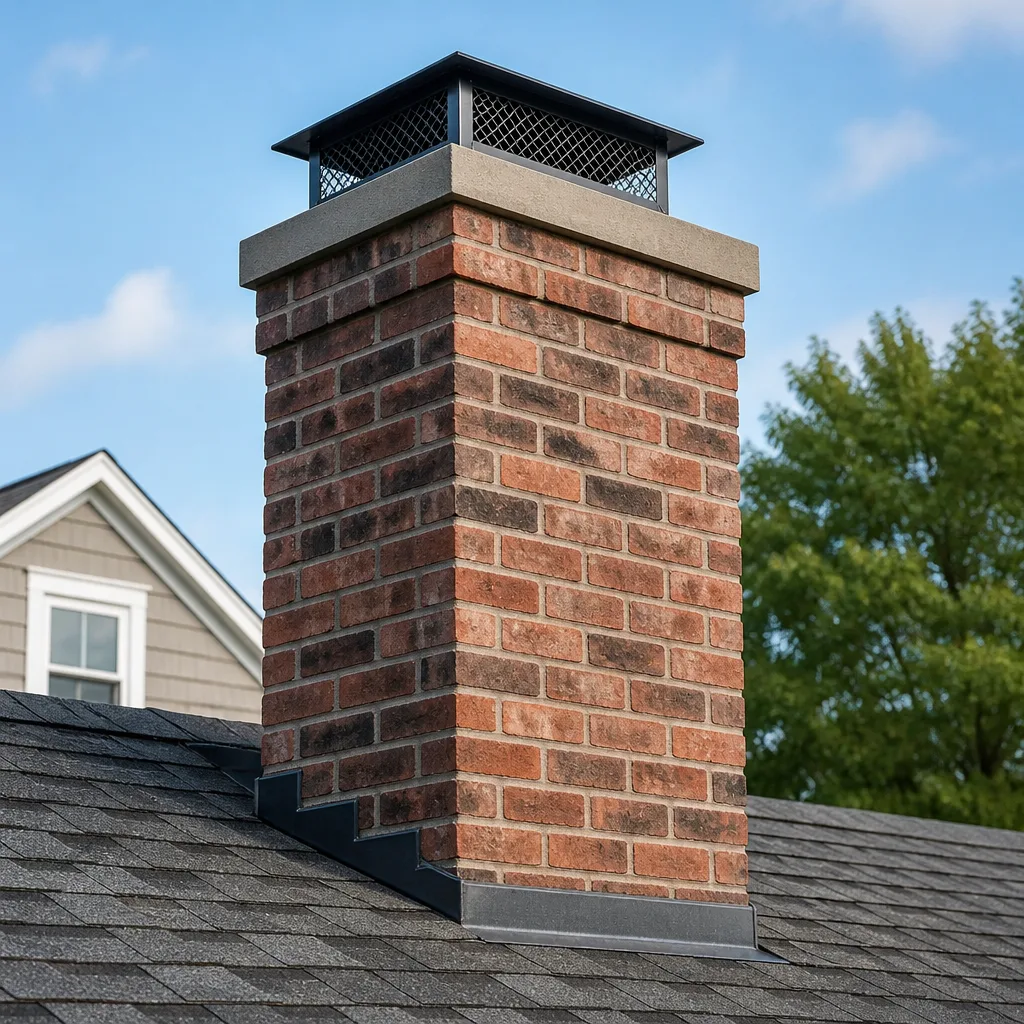 Caps & crowns
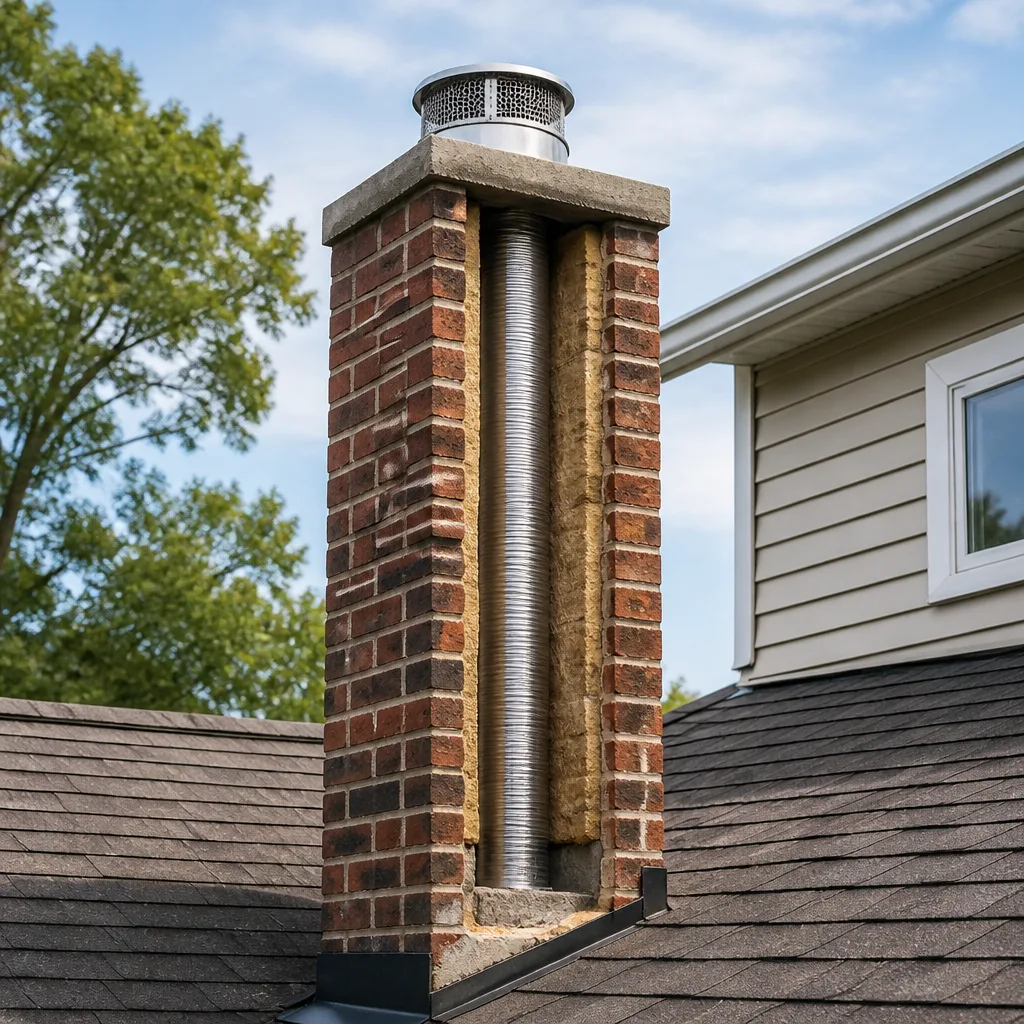 Flue relining
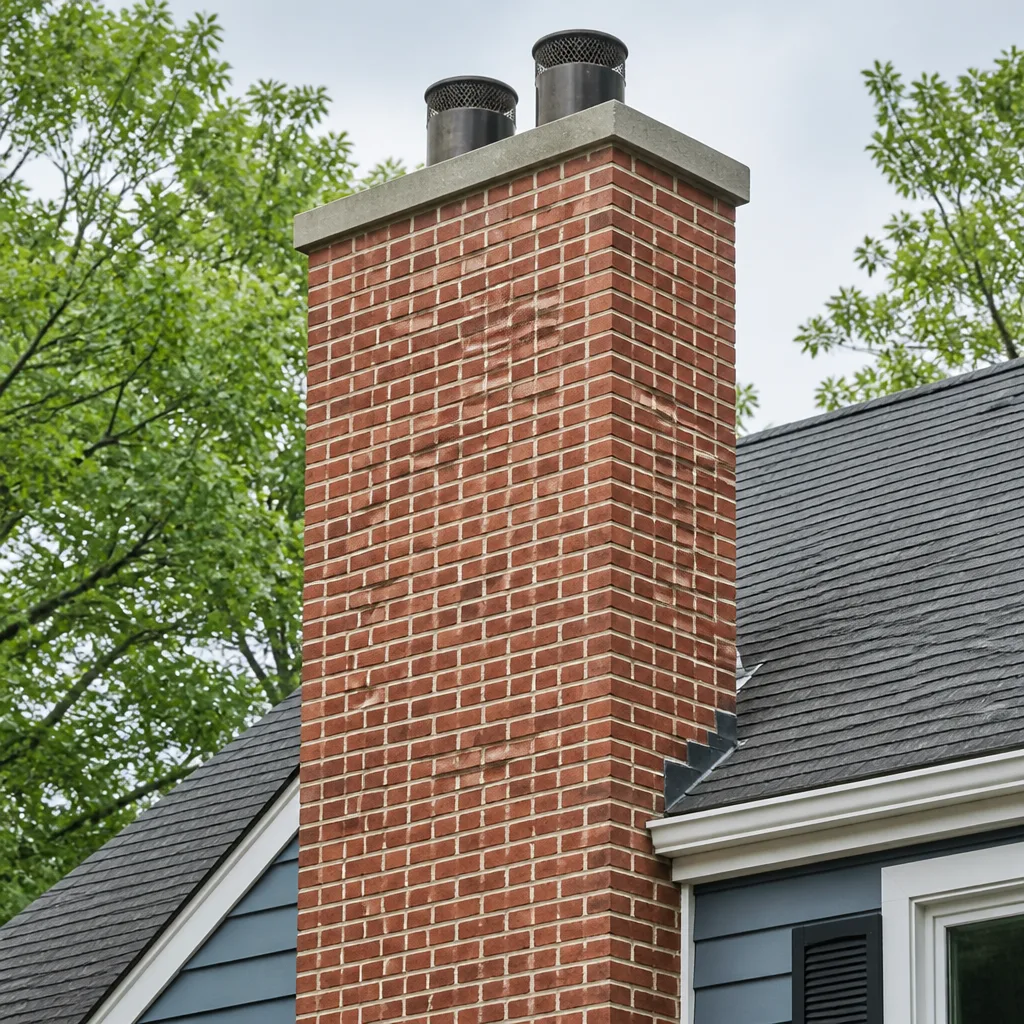 Masonry repair
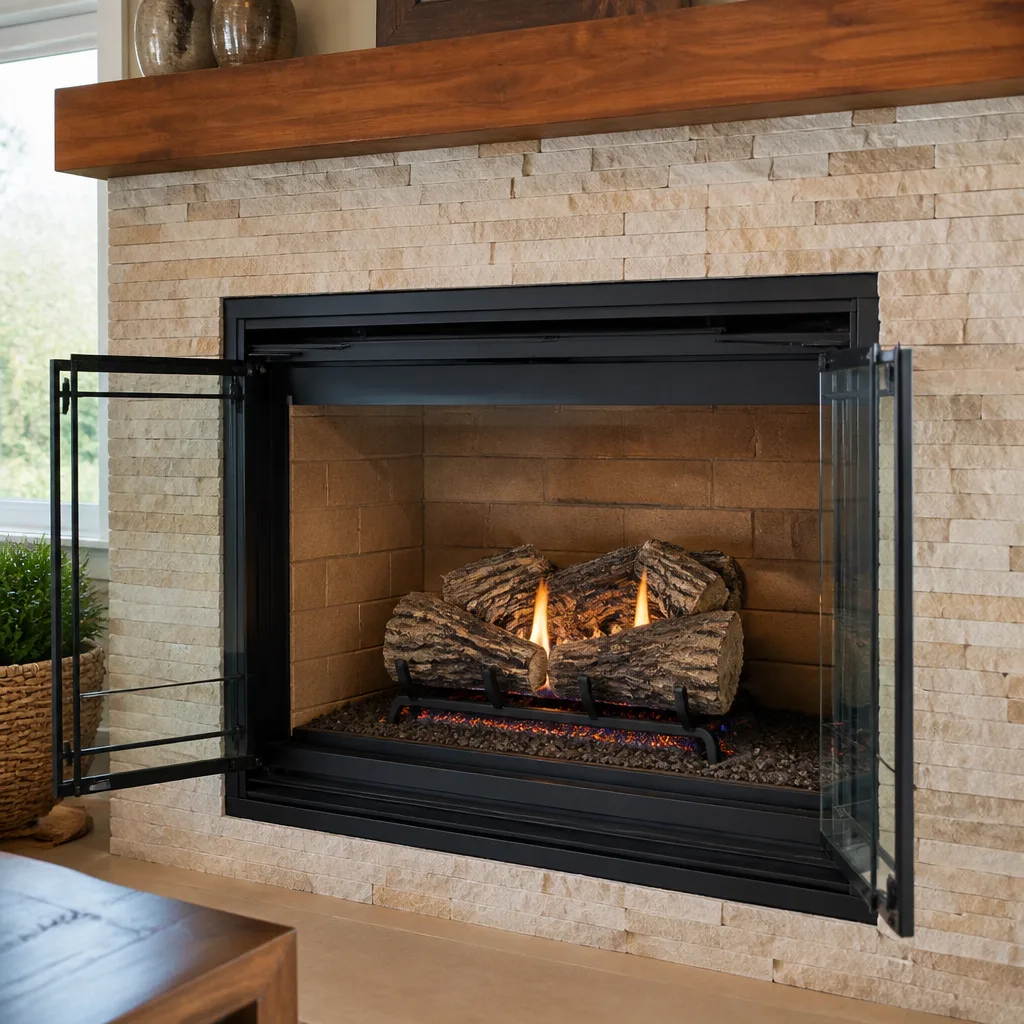 Gas fireplace service
Level 1 sweep and inspection to the NFPA 211 annual standard - flue, crown, cap, and flashing checked and photographed
Chimney sweep logs do not sweep chimneys. They loosen some creosote - which then falls where a brush and vacuum still have to collect it.
Choosing the Right Chimney Cleaning Brand: A Buyer’s Guide for Centennial
Most homeowners judge a chimney company by the truck, the uniform, or the price on the invoice. The material and chemical brands a contractor actually works with tell you far more. Not all sweeping rods, rotary systems, and creosote treatments are equivalent, and a contractor who can’t name the products they’re using or explain why they chose them is guessing at solutions. In this guide, we decode the professional-grade brands and materials that trade professionals rely on versus the consumer-grade substitutes that look similar on a shelf and perform very differently in your flue. You’ll learn how to evaluate what a Centennial contractor uses, what to ask, and what the answers reveal about their actual competence.
Quick Answer
The right chimney cleaning approach in Centennial depends on the products behind it: professional rod-and-brush or rotary systems sized to your flue, chemical creosote modifiers used only as a helper and never as a substitute for mechanical removal, and liner materials like 316Ti stainless alloy specified for wood burning. Ask a contractor to name the specific brands and materials they use and why. If they can’t explain their choices, they aren’t equipped for the job.
Styles & brands we work with
- Sweep & inspection
- Caps & crowns
- Flue relining
- Masonry repair
- Gas fireplace service
Table of Contents
- Why the Materials Matter More Than the Marketing
- Brush and Rod Systems: Professional Grade vs. Hardware Store Kits
- Chemical Creosote Modifiers: What They Do and What They Don’t
- Liner Materials: 316Ti vs. 304 and Flexible vs. Rigid
- Mortar and Crown Products: Substrate Prep Is Half the Job
- How to Ask a Centennial Contractor About Their Materials
- Evaluating Chimney Cleaning Product Brands
Why the Materials Matter More Than the Marketing
A chimney is a system, not a hole in the roof. The brush that scrapes your flue, the chemical that softens glazed creosote, the liner that carries combustion gases out, and the crown that sheds water off the top all have to work together. When one part of that system is chosen for cost rather than performance, the whole chain suffers.
Here’s what makes this hard to judge from the outside: consumer-grade and professional-grade products often look identical. A hardware store sweep kit and a trade-grade brush system both have rods and bristles. A creosote spray from a big-box shelf and an industry creosote modifier both come in a bottle. The difference lives in the details – bristle material, rod flexibility, chemical concentration, alloy composition – and those details decide whether your flue actually gets clean or just gets touched.
The fire risk is real and specific. Creosote builds in layers, and when it hardens into a glazed, tar-like form, it ignites at lower temperatures than homeowners expect. A proper chimney sweep removes that fuel load mechanically. If the tools are wrong or the technique is rushed, residue stays behind and the next fire season carries more risk than it should.
Centennial sits at elevation along the Front Range, where long, cold winters mean heavy wood burning and rapid creosote accumulation. That climate raises the stakes on material choice. A company that treats product selection as a cost line item, rather than a decision about what actually works in a high-altitude, high-use setting, is a company to question.
Brush and Rod Systems: Professional Grade vs. Hardware Store Kits
Professional sweeping systems fall into two general families: traditional rod-and-brush setups and rotary systems. Both have a place, and a competent contractor owns both and knows which one a given flue calls for.
- Rod-and-brush systems: Trade-grade rods are flexible, fiberglass or nylon, and come in lengths that let a technician reach the full run of even a tall flue. Brushes are sized to the flue’s exact dimensions – poly for stainless liners, wire for heavy masonry buildup, and correct-diameter heads so the bristles contact the full wall without scouring the liner.
- Rotary systems: Motor-driven whips and chains handle stubborn glazed creosote and long runs. They generate consistent contact and are effective in the longer, sometimes offset flues common in Centennial’s two-story and split-level homes.
Consumer kits are a different animal. Hardware store rods are shorter and stiffer, brush heads are sold in a small set of “close enough” sizes, and the whole thing assumes an accessible, straight flue from below. In a two-story Centennial home with an offset, the rod bends where it should turn, the brush skips the far side of the liner, and the job looks finished while a fresh layer of soot stays put.
The size question matters more than most homeowners realize. An undersized brush glides past the flue walls. An oversized wire brush can abrade a stainless liner. A contractor who measures the flue and selects the head accordingly is doing something a consumer can’t replicate with a kit that assumes one size fits most.
Chemical Creosote Modifiers: What They Do and What They Don’t
Chemical creosote modifiers – the most familiar being Anti-Creo-Soot and similar products based on catalysts and conditioners – do one thing well: they soften and loosen certain stages of creosote so that mechanical removal is easier and more complete. They are a helper, not a solution.
What they don’t do is remove creosote on their own. A spray that claims to “break down” glazed creosote without any sweeping is overselling. Glazed, tarry third-degree creosote is dense and bonded to the flue wall, and nothing short of a brush or rotary whip takes it off. A company that sells you a chemical treatment and skips the mechanical work is leaving the hazard in place.
When a professional should use a modifier:
- When the flue has moderate, dry, sooty creosote that benefits from conditioning before sweeping, so it comes off more completely.
- When a homeowner burns properly seasoned wood and the goal is to keep future buildup looser and easier to remove.
- When a follow-up sweep is scheduled and the modifier is used to soften a stubborn layer over time.
When they shouldn’t: as a substitute for a sweep, as a way to “defer” a proper cleaning, or as a product pitched to a homeowner who’s never had the flue evaluated. In our experience, the modifier is the assistant. The sweep is the work.
Ask a Centennial contractor which product they use, why they chose it, and how it fits into the sweep rather than replacing it. A clear answer tells you they understand the chemistry. A vague one tells you they’re using a bottle as a talking point.
Liner Materials: 316Ti vs. 304 and Flexible vs. Rigid
The flue liner is the part of your chimney that carries combustion gases and heat away from the house. When it’s cracked, spalled, or missing, the chimney can’t do its job. Choosing the right replacement material matters, and the two standard stainless grades perform differently.
- 316Ti stainless: Contains titanium, which stabilizes the alloy against the corrosive effects of wood-burning flue gases and heat cycling. It’s the grade professionals typically specify for wood-burning applications.
- 304 stainless: A general-purpose alloy that works for gas and certain lower-demand applications but is less resistant to the corrosive byproducts of wood burning.
- Flexible liners: For offsets, angles, and existing flues that aren’t perfectly straight. They can be installed without major demolition.
- Rigid liners: Sectional lengths suited to straight runs and situations that call for a heavier, dimensionally stable liner.
At Centennial’s elevation, wood burning runs hotter and the seasonal burn cycle is longer than at lower elevations, which puts more stress on the liner alloy. That’s part of why the grade matters here. A contractor specifying DuraFlex for a wood application is choosing a product line built for that service environment. One who specs 304 for the same job is either uniformed or cutting cost.
This is also where material knowledge connects to chimney cap & crown work. A properly capped flue keeps rain and animals out, and a sound crown sheds water away from the masonry so the liner’s exterior stays dry. The system works only when every layer is specified correctly.
Mortar and Crown Products: Substrate Prep Is Half the Job
Crown repair and smoke chamber parging are where cheap products show their limits fastest. The crown at the top of your chimney takes the full force of weather. The smoke chamber below is where turbulence, heat, and corrosive gases concentrate. Both need materials formulated for the job, applied over a properly prepared substrate.
What professionals use:
- Crown repair products: Flexible, crack-bridging, masonry-grade materials formulated to move with the crown and shed water, applied over a cleaned and prepped surface. Products like those from Copperfield are built for this category.
- Smoke chamber parging: Refractory-grade mortar smoothed up the chamber walls, reducing turbulence and protecting the masonry from corrosive gases.
What hardware store products are: general-purpose mortar mix and caulk. Neither is formulated for a chimney crown’s exposure or a smoke chamber’s heat and chemistry. Both fail faster, and a crown that fails lets water into the masonry, the liner, and the house.
Substrate prep is where the pro’s advantage is most visible. A crown poured over dirty, loose, or wet masonry delaminates no matter what product goes on it. A smoke chamber parged over soot and spalling brick won’t bond. The prep – cleaning, removing loose material, addressing cracks first – is as much of the job as the material itself, and it’s the step a fast, cheap contractor skips.
This is the same logic behind HeatShield liner restoration. When the flue liner has deteriorated but isn’t so far gone that it needs full replacement, HeatShield can address the damaged sections, filling cracks and restoring the liner surface without the full tear-out a stripped liner would normally require. It’s a specialized capability most sweep-only companies don’t offer, and it’s often a better fit for Centennial homes with aging liners that are still structurally sound.
How to Ask a Centennial Contractor About Their Materials
You don’t need to be an expert to evaluate a contractor’s competence. You need to ask questions that reveal whether they understand their trade or have memorized a sales pitch. Here’s a short version, then the full walkthrough.
- “What brush system do you use, and how do you decide which one for my flue?” A real answer names the systems, mentions flue dimensions, and explains the choice. A vague answer tells you the technician is improvising.
- “What grade of stainless do you specify for a wood-burning liner, and why?” The right answer is 316Ti, with an explanation about heat and wood-burning flue gases. If they hesitate or say “stainless is stainless,” keep looking.
- “Do you use chemical creosote modifiers, and when?” The right answer: as a helper before or alongside mechanical removal, never as a substitute. If they propose a chemical treatment with no sweeping, that’s a red flag.
- “What do you use for crown repair, and how do you prep the surface?” Look for a masonry-grade crown product and a prep process. If they mention caulk or general mortar, ask for detail.
- “Can you show me camera footage before recommending repair?” A contractor confident in their materials and their inspection will show you what they found. One who can’t or won’t is asking you to trust a sales pitch.
- “What brands do you work with, and what does your work look like from inspection through repair?” A capable fireplace repair provider can name real product lines and walk you through the full scope. A sweep-only outfit that refers everything else out can’t.
Ask these questions before you book the job, not after. The answers tell you whether the company thinks about materials the way a tradesperson does – as the foundation of the work – or the way a sales operation does, as a line item to save a few dollars on. The questions separate trade-level knowledge from sales-level talking points in a few minutes.
Evaluating Chimney Cleaning Product Brands
Brand names are a signal, not a guarantee. The question is whether a contractor knows why each brand is on their shelf and what job it’s suited for.
The brands professionals specify share a few traits. They’re formulated for trade use, they hold up under real chimney conditions, and they’re chosen because they perform in specific applications rather than because they were on sale. The material and product families a full-scope chimney company works with – DuraFlex and Olympia Chimney for liners, HeatShield for liner restoration, Gelco and Famco for related chimney components, Copperfield for crown and masonry work – each represents a specific capability, not a marketing line. A company that can explain the fit between product and job is a company that understands its trade.
How to evaluate what a contractor tells you:
- Ask why. The brand name alone is meaningless. Ask why this one for this job. If the answer references your flue’s actual condition, elevation, burn type, or access, they’re thinking. If it references “what we always use,” they’re not.
- Ask what’s on the truck. A contractor whose van is stocked with the right sized brushes, the right grade of liner, and a range of crown products can handle the job. One who shows up and orders materials day-of will improvise.
- Ask what happens if the inspection turns up something unexpected. A full-scope company evaluates and then acts, on the same visit or the same plan. A company that refers the structural work elsewhere is handing you off to a second contractor who has no stake in the first contractor’s assessment.
- Ask for the estimate in writing, with materials specified. Flat-price estimate, materials named, scope clear, before you commit. The price is set by the written estimate and the local pro is licensed and insured as their state requires.
Centennial homeowners come back to this question every year or two, burner season after burner season. The company that names its products, explains its choices, and can carry the job from inspection to repair is the one worth keeping on your call list.
Common Mistakes to Avoid
- Judging a contractor by the price alone. The cheapest quote often reflects consumer-grade materials and a rushed sweep. In Centennial’s longer burn season, that shortcut comes back fast.
- Accepting a chemical treatment in place of a sweep. Creosote modifiers help, but they don’t remove glazed buildup. If the pitch is a spray with no mechanical work, walk away.
- Letting the contractor specify a liner without asking the grade. 316Ti is the professional choice for wood burning. If they can’t tell you what grade they’re installing, ask – the answer reveals their knowledge and the product you’ll live with.
- Skipping the crown and cap questions. A clean flue under a cracked crown will just get wet again next season. Ask what product they use for crown repair and how they prep the surface.
- Believing a company that can’t explain its brush sizing. A brush that’s too small skips the flue walls. A brush that’s too big can damage the liner. The right head is chosen for your flue’s exact dimensions, not a one-size-fits-most kit.
- Hiring a company that refers the structural work out. Inspection and repair should come from the same place. A company that hands your liner or crown off to a second contractor can’t stand behind the verdict.
- Deprioritizing the inspection itself. A sweep without an inspection is half a job. The inspection is where you learn what your materials need this year, before the burn season forces the issue.
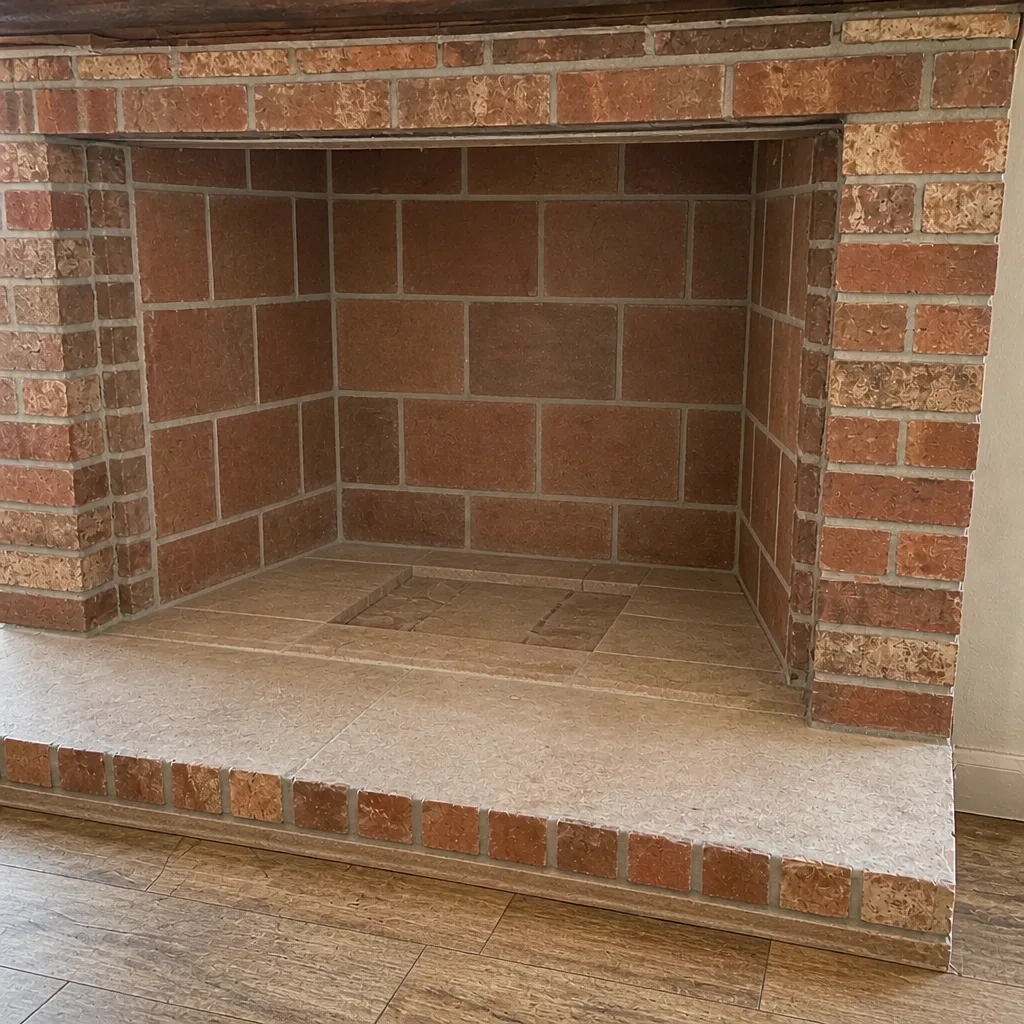
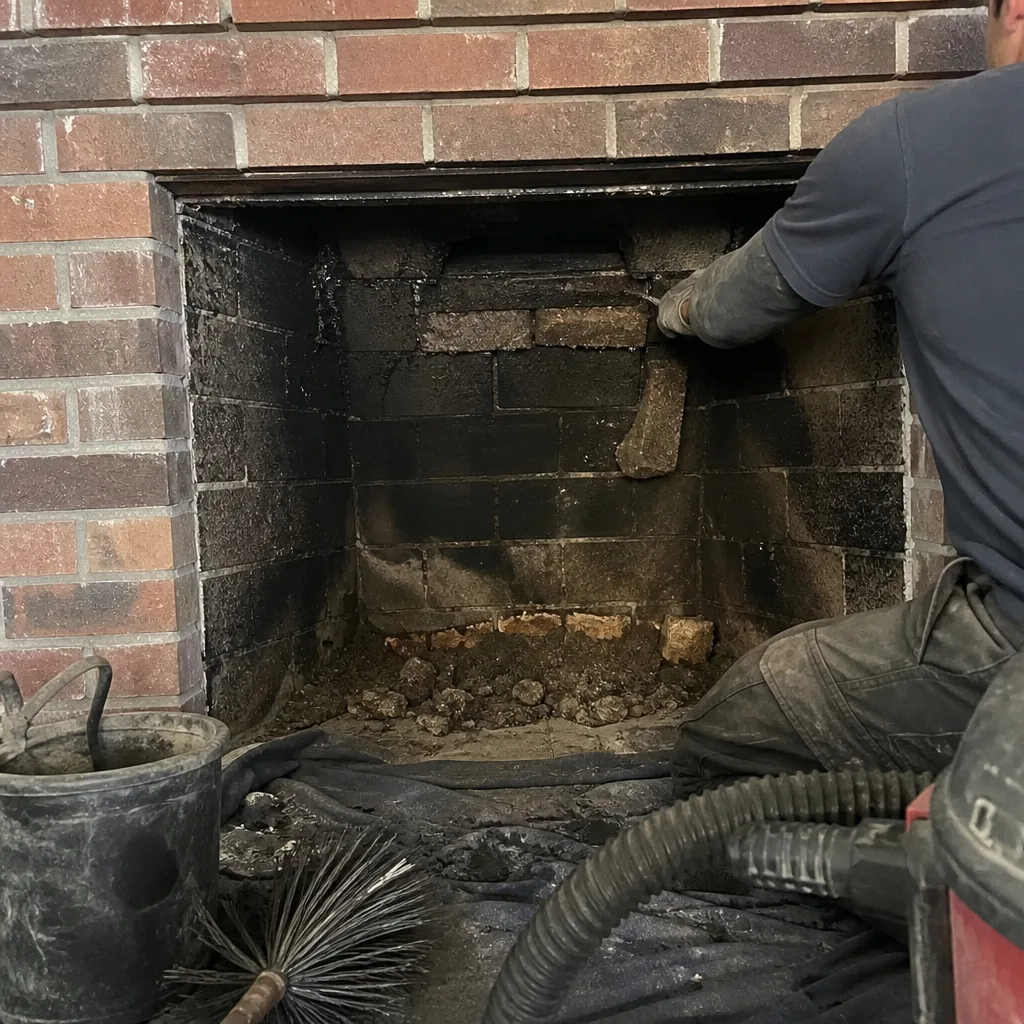
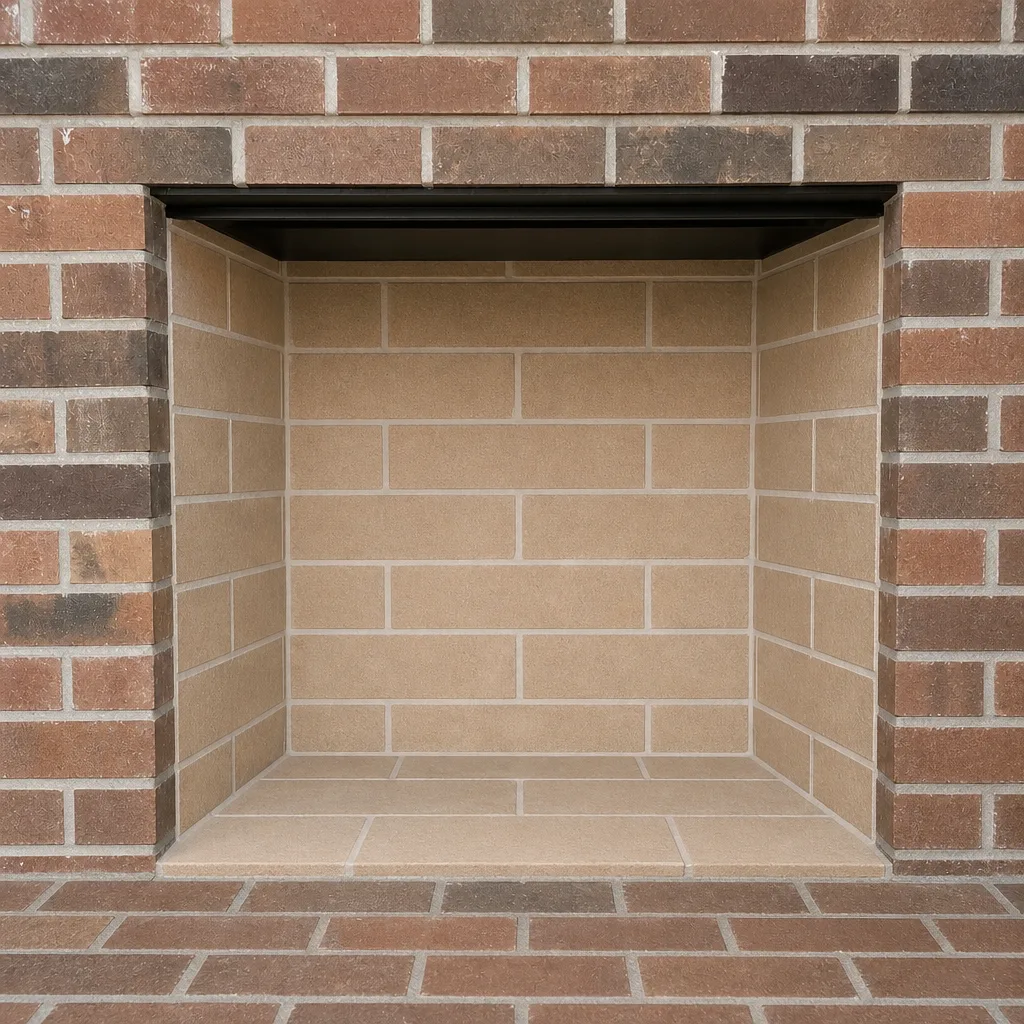
See the difference
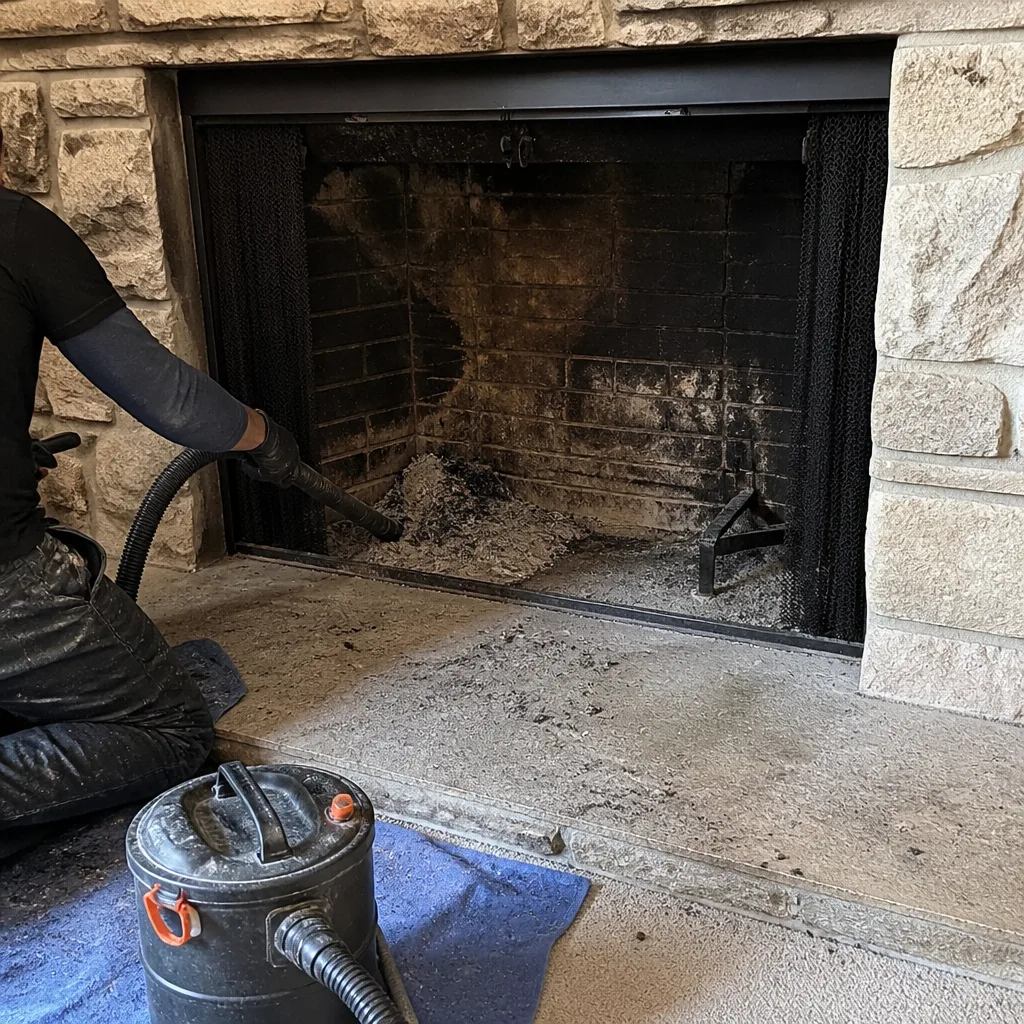 Before
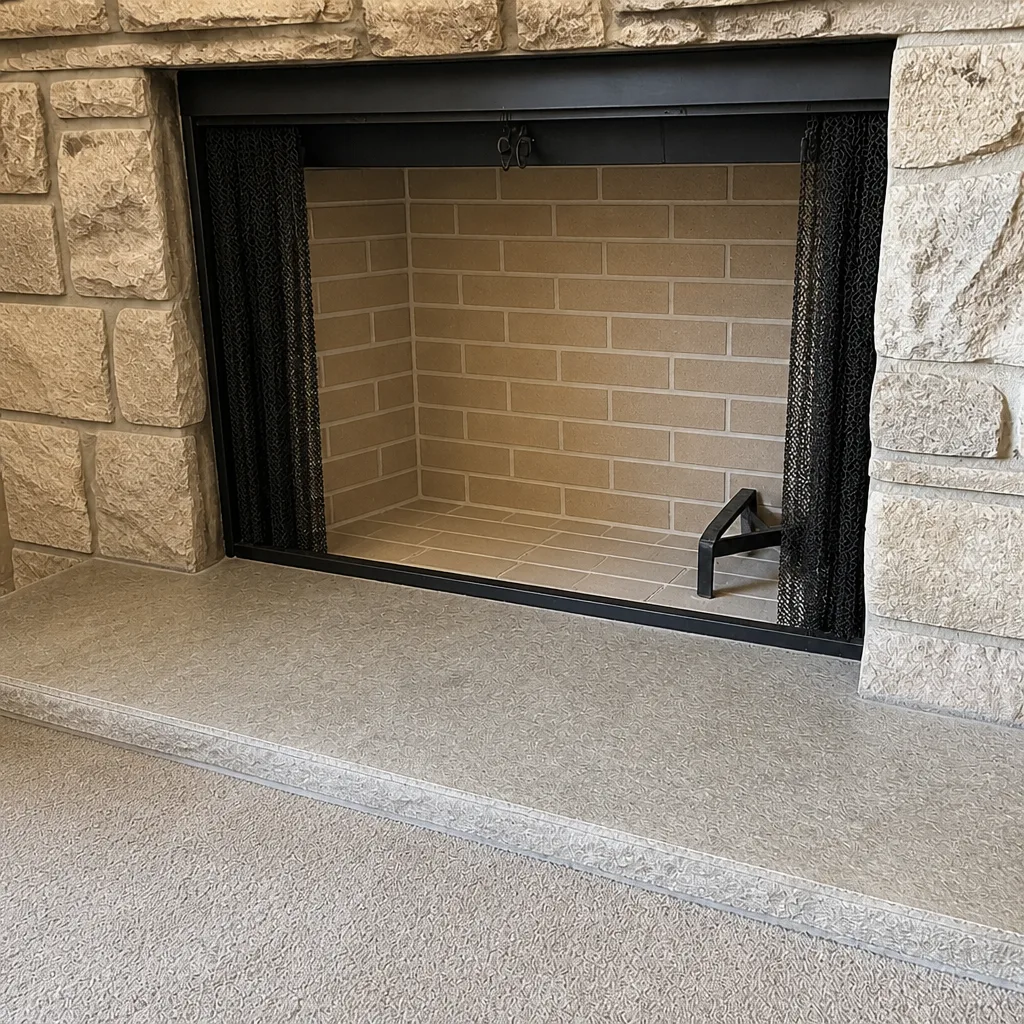 After
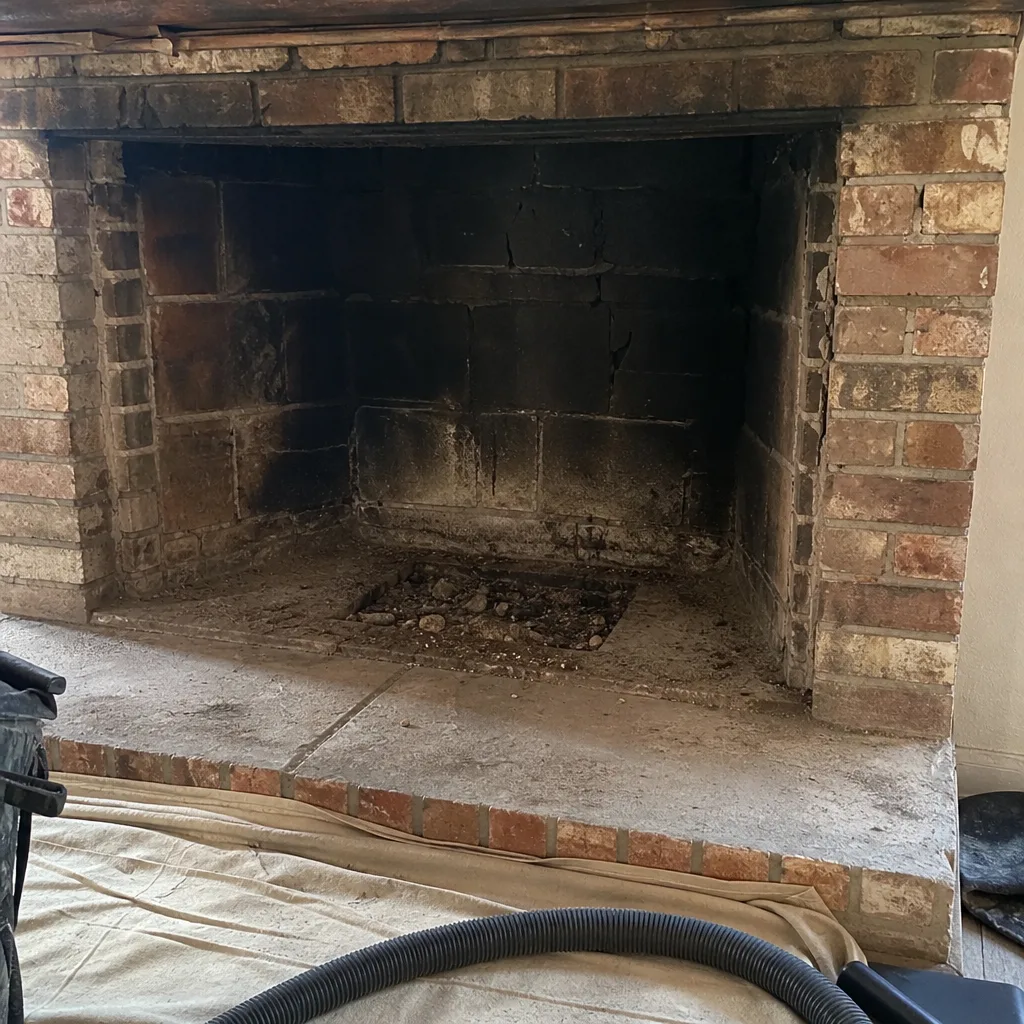 Before
 After
 Before
 After
When to Call a Professional
Some jobs are obviously calls for a professional: a chimney fire, a damaged crown, cracked masonry, or a flue that’s never been evaluated. But the subtler cases matter just as much. A flue that’s due for its yearly sweep, a creosote smell that gets stronger in warm weather, a smoke problem that shows up when the fire is lit, and a liner that’s showing spalling inside all warrant a real inspection. In Centennial, where the burn season is long and the winter nights are cold, putting it off until spring is the wrong move. Schedule a sweep before burner season begins, so any needed repair has a window to be done. Our technicians have up to 8 years of experience, and we work with the brands professionals specify, so the material conversation is one we can actually have. From sweep to structural repair, we tell you what we find and we fix it – with the evidence in hand, so nothing is recommended that you can’t see for yourself. Centennial Chimney Sweep Pros offers free estimates in Centennial – call (866) 589-5349.
Frequently Asked Questions
Professional contractors specify brands chosen for specific applications: DuraFlex for flexible and rigid liners, HeatShield for liner restoration, Copperfield for crown and masonry work, and Olympia Chimney for chimney components, along with Gelco and Famco for related systems. The brand matters less than the contractor’s ability to explain why each one fits your flue and your burn type. Ask why, not just which.
No. Chemical creosote modifiers soften and loosen certain stages of creosote so mechanical removal is more effective, but they don’t remove glazed buildup on their own. A sweep with the right brush or rotary system does the actual work, and the modifier is a helper alongside it. Call (866) 589-5349 for an exact quote on a proper sweep – estimates are free.
316Ti stainless alloy is the professional choice for wood-burning applications because it contains titanium, which stabilizes the metal against the corrosive effects of wood-burning flue gases and heat cycling. At Centennial’s elevation, with longer burn seasons and hotter fires, that resistance matters more. If a contractor can’t tell you what grade they’re installing and why, keep asking.
HeatShield is a liner restoration system that addresses damaged flue liner sections – filling cracks and restoring the surface – without the full tear-out that a stripped liner normally needs. It’s a good fit when the liner has deteriorated but is still structurally sound. A full replacement is the answer when the liner is beyond restoration. The inspection tells you which. Call (866) 589-5349 for an exact quote.
You don’t, until the flue is measured and inspected. The brush head has to match the flue’s exact dimensions – an undersized brush skips the walls, and an oversized wire brush can abrade a stainless liner. A professional measures the flue and selects the head accordingly. Consumer kits assume one size fits most, which is why they miss offset flues common in Centennial two-story homes.
A written estimate should name the materials, describe the scope of work, and set the final price per job – flat-price, agreed before booking. The local pro is licensed and insured as their state requires. If anything is recommended beyond a sweep, ask for the camera footage that justifies it before you commit. Call (866) 589-5349 for a free estimate.
The Bottom Line
Chimney cleaning products tell you more about a contractor than their marketing does. Professional rod-and-brush and rotary systems, correctly sized for your flue, remove what a hardware store kit leaves behind. Chemical creosote modifiers help mechanical removal but can’t replace it. 316Ti stainless is the grade professionals specify for wood burning, and it matters more at Centennial’s elevation and longer burn season. Crown and smoke chamber materials need proper substrate prep to hold. Ask why, not just which. A company that can explain its materials and carry the job from inspection through repair is built to last. If they can’t explain what they’re using, they aren’t equipped for the job – call (866) 589-5349.
Contact Centennial Chimney Sweep Pros
We work with a curated roster of professional-grade products, and we keep the full scope in one place: Centennial Chimney Sweep Pros covers sweeping, inspection, liner work, cap and crown installation, and structural repair. Find out what’s actually in your flue and what it needs. Call (866) 589-5349. We answer 24/7. Fast dispatch from 7am to 7pm, Sunday through Friday. Estimates are free, and the price is set per job by the written estimate.
Written by the team at Centennial Chimney Sweep Pros.