
Last updated November 23, 2026
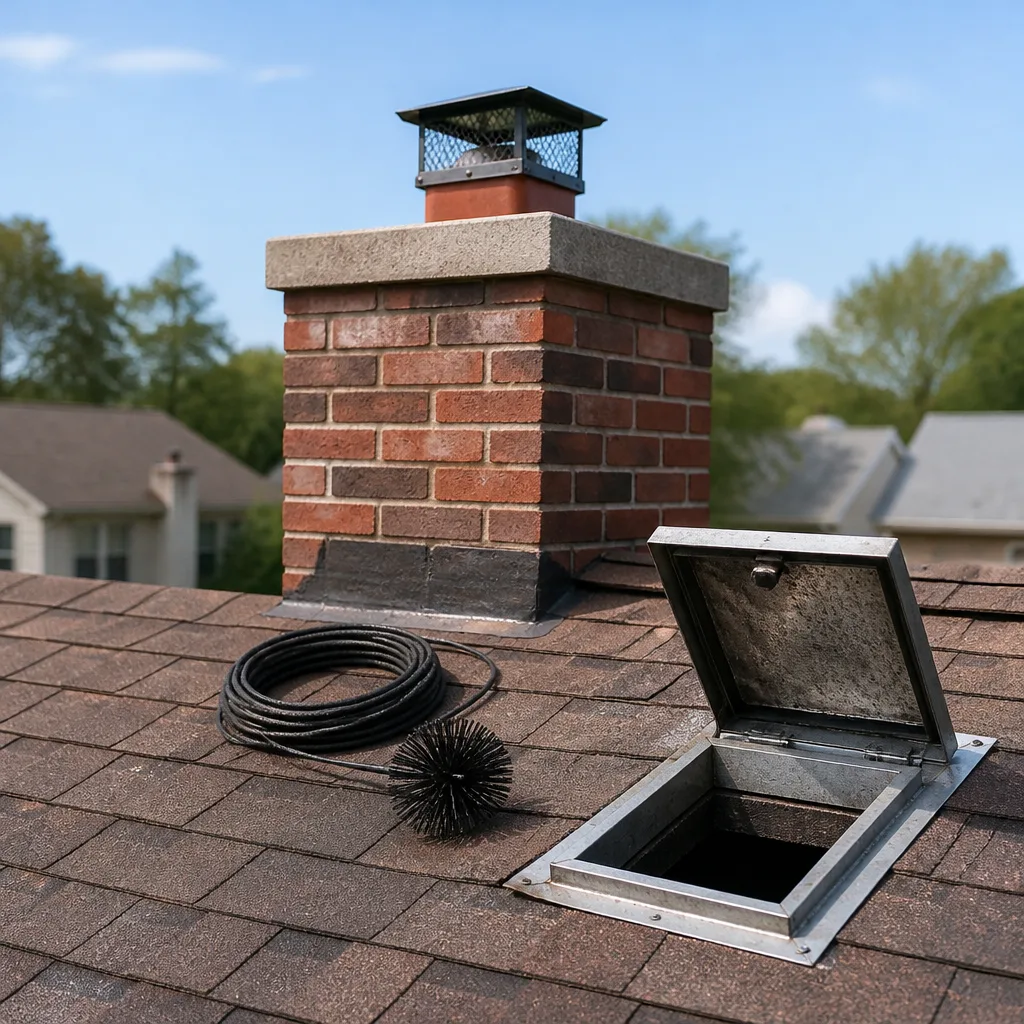 Sweep & inspection
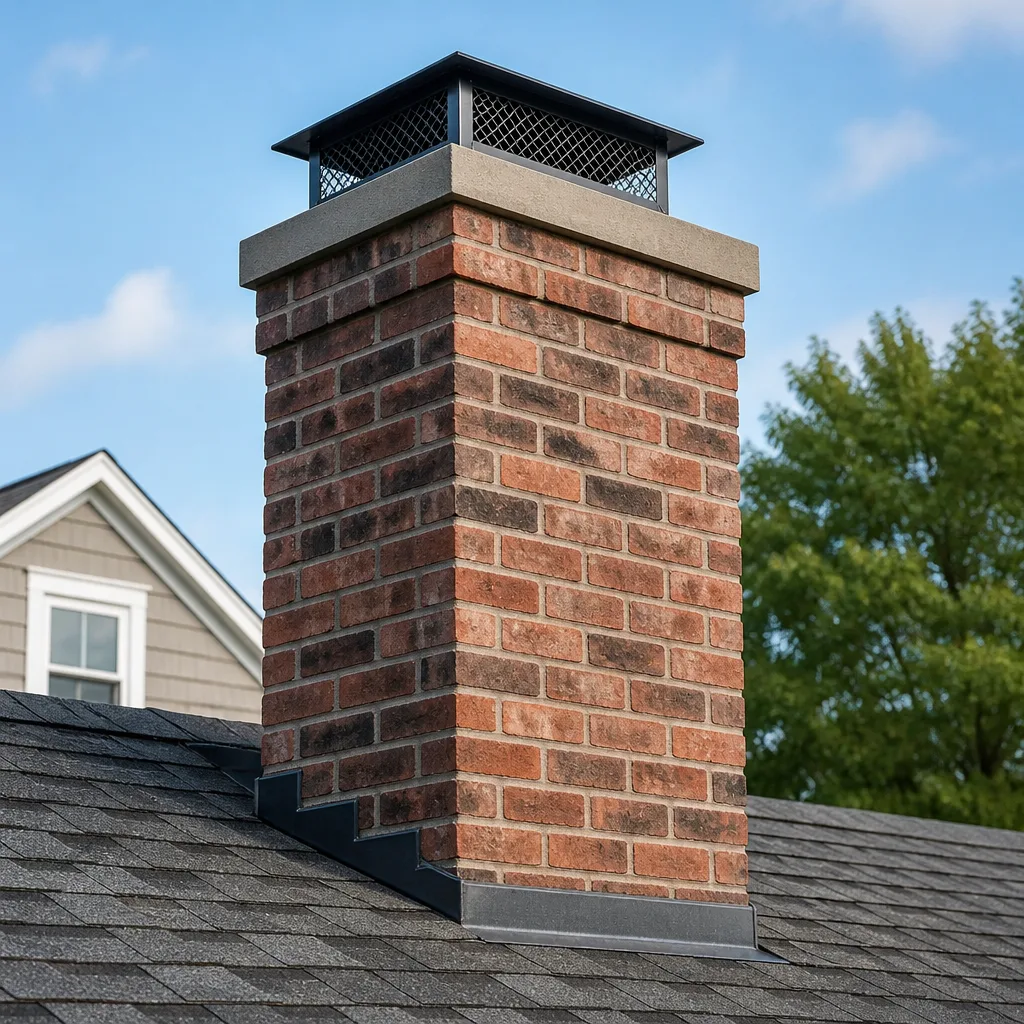 Caps & crowns
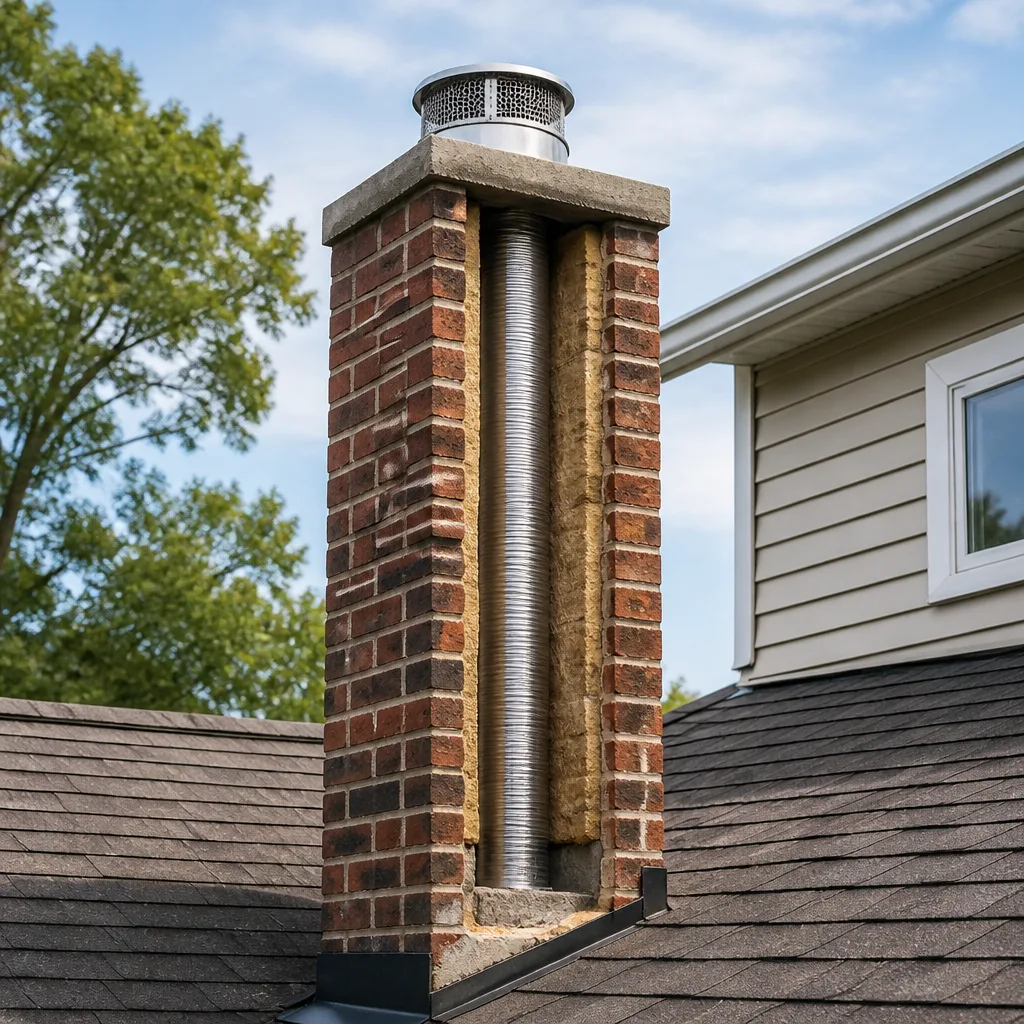 Flue relining
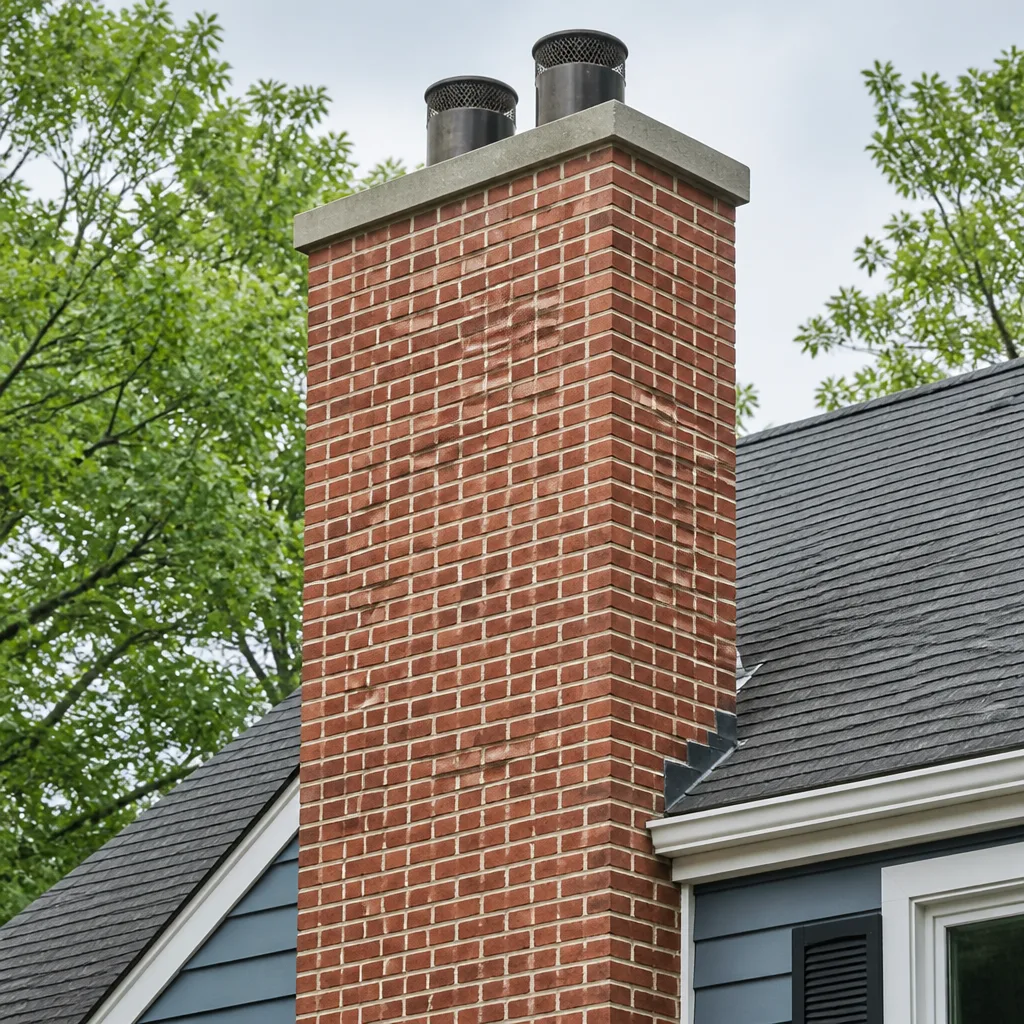 Masonry repair
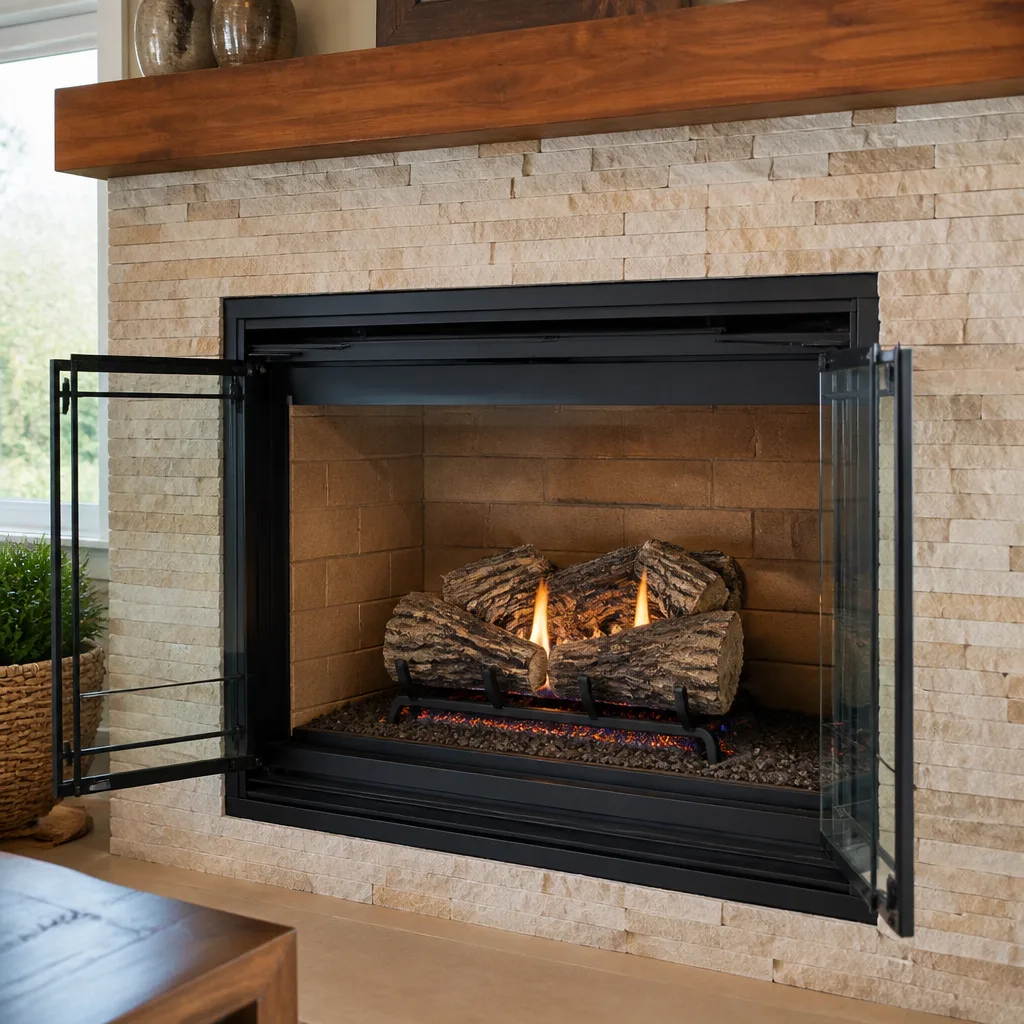 Gas fireplace service
Level 1 sweep and inspection to the NFPA 211 annual standard - flue, crown, cap, and flashing checked and photographed
Chimney sweep logs do not sweep chimneys. They loosen some creosote - which then falls where a brush and vacuum still have to collect it.
DIY vs Professional Chimney Cleaning: The Centennial Homeowner’s Decision Guide
You can rent chimney brushes at most hardware stores. What you can’t rent is a rotary camera system, a liner gauge, or the trained eye that knows what a hairline crack in a clay tile looks like long before it becomes a carbon monoxide path. That gap between cleaning and seeing is where this debate actually lives. Most homeowners frame the choice as cost versus safety: save the money and take your chances, or pay someone and stop worrying. The real dividing line is diagnosis. Cleaning is straightforward work. Inspection is the hard part, and in a chimney that gets real use, you can’t clean well without looking closely. This guide covers what DIY brushing genuinely accomplishes, what professional equipment and eyes catch that a brush cannot, the risk factors specific to Centennial homes that raise the stakes, and the maintenance you can legitimately handle yourself between visits.
Quick Answer
For a lightly used, modern chimney in good repair, DIY brushing can handle surface-level soot and first-stage creosote once you understand what you’re doing. But if your Centennial home has an original clay tile liner, a wood stove, more than a cord of wood through it per season, or you can’t recall the last professional inspection, the cleaning should be paired with an inspection only a trained technician can perform. Cleaning without that look is a guess, and a guess is not the same as knowing your flue is sound.
Styles & brands we work with
- Sweep & inspection
- Caps & crowns
- Flue relining
- Masonry repair
- Gas fireplace service
Table of Contents
- What DIY Chimney Brushing Can and Cannot Do
- The Tools Gap: What Pros Have That You Can’t Rent
- Centennial-Specific Risk Factors That Change the Math
- What You Can Legitimately Maintain Between Visits
- The Liability and Documentation Question
- How a Professional Sweep Actually Goes
- What a Sweep Costs and What DIY Really Saves
- The Verdict for Each Kind of Homeowner
What DIY Chimney Brushing Can and Cannot Do
DIY brushing removes the stage-one creosote you can see and reach: the loose, flaky soot that coats the flue walls and the firebox after a season of burning. That’s not nothing. If you burn a few evening fires in December and January, your flue may carry nothing more than that, and a correctly sized poly brush run down the flue from the top after a good cleaning can keep a lightly used chimney in reasonable shape for a season. But the limits arrive fast.
Here’s what a homeowner with a brush, rods, and a shop vac genuinely can do:
- Remove loose soot and stage-one flaky creosote from the straight sections of the flue
- Sweep the firebox and the smoke shelf area that’s reachable from below
- Vacuum up debris with a properly filtered HEPA unit
- Visually inspect the firebox and damper from the room
And here’s what the same setup cannot do:
- Access the smoke chamber properly. That chamber above the damper pulls smoke around a tight, angled path, and it’s where a surprising amount of glaze and soot accumulate. Cleaning it correctly requires specialized tools, and getting the brush angle wrong can leave a dangerous amount of deposit behind.
- Inspect the flue liner interior. A brush passes over a hairline crack without catching it. Only a camera reveals it.
- Determine creosote stage. Stage-two creosote is sticky, and stage three is a hard, tar-like glaze that bonds to the tile. Brushing will not remove either, and both are the fuels for a chimney fire. A trained technician reads the flue and knows the difference by sight and touch.
- Check the crown, cap, and masonry joints from the roof for water intrusion, which is the slow cause of most structural chimney damage over time.
If you’re reasonably handy and your chimney is in known-good condition, DIY brushing has a place. If you can’t confirm the condition, you’re cleaning a system you haven’t actually assessed. That’s the diagnostic gap in a paragraph. Our Centennial Chimney Sweep Pros technicians don’t just sweep; they inspect every flue they clean, so nothing gets brushed over without being looked at first.
The Tools Gap: What Pros Have That You Can’t Rent
Your local hardware store sells brush kits with three sizes of poly brush and flexible rods. That’s a fraction of what a professional sweep actually uses. The difference in tools is one of the clearest reasons the “do it yourself and save” pitch falls apart for anything beyond a light surface clean.
Professional-grade equipment for a sweep and inspection includes:
- Rotary chimney cleaning systems that spin a chain or whip head inside the flue to cut through glazed creosote a straight brush simply slides over
- Camera inspection systems with a color monitor and recording, so the technician and homeowner both see the same liner interior on screen
- Liner gauges that confirm flue tile thickness and reveal spalling or gaps the eye alone reads as “fine”
- High-volume HEPA vacuums with a chimney-specific dust containment setup that keeps soot out of the room
- Smoke chamber and damper tools shaped for the angled reach above the throat, where standard brushes don’t go
- Rooftop and access gear sized for safe work on pitched roofs and steep pitches
The economics are the real story. A rotary head, a full rod set, an inspection camera, and the rooftop gear together cost more than several years of standard sweep appointments. That’s a cost a professional spreads across many jobs. A homeowner uses the gear once per season and stores it the rest of the year. Tools aren’t only for cleaning; they underwrite the diagnostic capability that separates a sweep with real oversight from a brush run down the flue on a Saturday afternoon.
We work with the brands professionals specify, including Olympia Chimney and Gelco components, because the sweep itself is only the first visit. If a liner needs a repair or restoration, single-company capability matters: sweep, inspection, and repair under one accountable service.
Centennial-Specific Risk Factors That Change the Math
Centennial is a specific place to own a chimney, and the local factors tip the calculation toward professional service more than most homeowners realize. Burn cycles here are long and hard. Many residents burn three to four cords a season, well beyond the weekend-fire pattern in milder markets, and that volume pushes creosote accumulation faster and deeper than the average national number.
Four risk factors stand out for Centennial homeowners:
- Older homes with original clay tile liners. If your home went up in the 1980s or 1990s, the flue almost certainly has a clay tile liner, and those tiles are aging out. Clay is durable but brittle. It cracks under thermal cycling, and a crack that runs through to the masonry is a carbon monoxide path on the other side. You cannot see this from the firebox with a flashlight. A camera sweep catches it.
- Wood stoves with high-output burns. Wood stoves burn hotter and denser than open fireplaces, and the creosote they deposit is often stage two or stage three. A straight brush is not enough. Rotary cleaning is required, and so is knowing what you’re dealing with.
- Homes that may have had a chimney fire the owner never knew about. Chimney fires don’t always announce themselves. A low, roaring sound, a hot smell, a puffed-out damper that self-corrected. Many homeowners discover they’ve had one after a technician opens the flue and finds cracked tiles or warped components. That discovery is the entire argument for professional inspection in one line.
- Dry Colorado winters that stress masonry. The freeze-thaw cycle on exterior masonry and the crown is real in Centennial. Water intrusion through a failing crown or a missing cap slowly destroys from the inside, and none of that is visible from the ground. A proper inspection takes in the crown and cap, not only the flue.
If your home falls into two or more of those categories, DIY brushing without a professional assessment each season is a clean of a system whose condition you can’t confirm. We tell Centennial homeowners the same thing: get the flue on camera, get the report, then decide. Nothing gets recommended without evidence you can see, and when work can safely wait, we say so. You can book a chimney sweep and know the inspection is part of it, not an upsell.
What You Can Legitimately Maintain Between Visits
DIY isn’t all-or-nothing. Between professional visits, homeowners genuinely can and should do regular visual maintenance. In fact, a few minutes each season of careful looking keeps small issues from becoming structural repairs, and it gives a technician useful information when the appointment arrives.
Here’s a practical seasonal checklist. What you’re looking for is condition, not tools:
- Check the chimney cap. From the ground with binoculars, or from an open window if the cap is visible, confirm the cap is intact, attached, and free of obvious rust-through or debris. A missing or damaged cap lets water, birds, and squirrels in, and each is a real cause of damage. If you see damage, that’s a repair to call on, not to climb up and fix.
- Operate the damper. Open and close it fully. It should move without grinding or jamming. A stiff or stuck damper is often the first sign of rust or debris and is a sign to call rather than force it.
- Look at the firebox interior. With a flashlight and the fire out and cold, look for cracked firebrick, crumbling mortar joints, or pieces of brick that have fallen. Any of these means the firebox needs assessment before the next burn.
- Read the exterior masonry. From a safe distance at ground level, use binoculars to check for leaning, spalling brick faces, white staining (efflorescence, a sign of water moving through), or crumbling mortar. If a section looks soft or missing, that’s a call.
- Check the crown. The concrete cap at the very top should be continuous, sloped away from the flue, and free of cracks wide enough to hold water. A failing crown is one of the most common hidden causes of chimney damage, and it’s not a DIY repair.
For a quick visual guide: “good” is an intact cap that sits level, brick faces that are crisp and unbroken, mortar joints that are tight, and a crown that looks continuous with no cracks. “Bad” is a cap that’s loose or missing, brick faces that flake or fall away, white staining, mortar that’s receding, and a crown with visible water-staining or cracks. Photograph what you see at the start of each burning season. It gives you a baseline, and it’s information a technician can use on the visit.
What you should not attempt between visits is anything involving the flue interior, the smoke chamber, the cap and crown repair, or masonry. Those require the inspection capability covered above and, where work is needed, structural knowledge and material spec. Our chimney cap and crown work is designed to catch water damage at its source, and that’s the right place to spend money on chimney preservation.
The Liability and Documentation Question
A chimney fire in the same season as a DIY cleaning creates a documentation problem that surprises many homeowners. Here’s why it matters: most homeowner insurance policies won’t deny a claim for having cleaned your own chimney. But the proof-of-maintenance question gets harder to answer when there’s no record.
What a professional sweep documents that a DIY cleaning does not:
- A dated inspection report. It records flue condition on a specific date, what was found, and what was cleaned. If damage is discovered later, there’s a baseline that shows when the flue was sound and when it changed.
- A camera record. Images of the liner interior at the time of service form a visual record of condition that stands on its own when questions are asked after a fire.
- A documented recommendation. If a technician records that a liner is deteriorated and needs restoration, and a homeowner defers the work, the record shows the homeowner was informed. If the work is done, the record shows the correct repair was made.
- Product and material spec. When a liner restoration uses HeatShield or a DuraFlex stainless liner, the material is a documented spec that’s traceable to the manufacturer. If your insurance company asks what was installed and by whom, the answer is on file.
None of this is about blame after a fire. It’s about the homeowner having a clean, defensible record of diligence. If you sweep your chimney yourself, you have a clean flue and your word. If a professional sweeps it, you have a clean flue and a report. In a Centennial home with a clay tile liner past the twenty-year mark, that report is worth more than the difference in cost.
How a Professional Sweep Actually Goes
A professional sweep is a sequence of steps, and knowing what happens removes the mystery. Here’s the standard sequence for a residential chimney in Centennial:
- Set up containment. A drop cloth covers the hearth, and a HEPA vacuum runs throughout. You should expect a clean room when we’re done; the standard is no visible dust.
- Inspect from the firebox up. That means looking at the firebox, the damper, and the smoke chamber with a flashlight before any cleaning starts. A technician who cleans first and inspects after risks missing damage that the cleaning process could make worse.
- Camera the flue. The camera runs the full length of the flue, and you see the monitor. Cracks, gaps, stage-two and stage-three creosote, spalling tile, and blockages are visible to you, not only described. This is the step the DIY setup can’t replicate, and it’s the reason a professional sweep is worth more than a brush.
- Sweep the flue. Rotary or poly brush, chosen to match the creosote stage and liner material. A rotary head removes glaze; a poly brush handles surface soot. Using a rotary on a fragile clay tile can crack it, so this step is where an untrained hand and a trained hand diverge.
- Clean the smoke chamber and firebox. Smoke chamber access matters. This is the step that makes a real sweep more than a straight brush down the flue.
- Inspect the cap, crown, and exterior. From the roof, a technician reads the crown for cracks, the cap for attachment and integrity, and the masonry for spalling or joint failure.
- Provide the photo report. A written report with photos, findings, and recommendations. If work is needed, the estimate is written. The price is set per job by that written estimate, and there’s no surprise number added after the fact.
We tell you what we find, and we show it to you on the monitor before we say a word about repair. If the liner and masonry are in good shape, we say so. Repairs that can safely wait get flagged as such.
What a Sweep Costs and What DIY Really Saves
The honest comparison isn’t the price of a sweep versus the price of a brush. It’s a sweep plus an inspection versus a brush plus an inspection you’re not getting. Once you price in the inspection, the case for DIY on a working chimney narrows quickly.
A standard sweep appointment typically includes several components, and the value is distributed across them:
- The sweep itself. Cleaning the flue, smoke chamber, and firebox of loose deposits
- The inspection. Camera and visual, with findings recorded
- The photo report. Documented condition for your records and your insurer
- The written estimate. If a liner, cap, or crown repair is needed, the price is on paper before any work begins
Equipment cost for a DIY setup: brush kit, rods, HEPA vacuum, drop cloth, and rooftop gear if you plan to sweep from the top. Add a camera system or liner gauge and the cost climbs well past several years of standard sweep appointments. Most homeowners are buying single-use equipment, performing a partial cleaning, and still don’t know the condition of the flue. The savings look real on paper and shrink fast in practice.
Our technicians have up to 8 years of experience reading Centennial chimneys, and the sweep includes a camera inspection as standard. Call (866) 589-5349 for an exact estimate on your home. Estimates are free, and the written estimate sets the final price, so there’s no number you haven’t seen before the work starts.
The Verdict for Each Kind of Homeowner
The right answer depends on which home you own and how you burn. Here’s how it breaks down:
- Light user, known-good modern chimney, recent professional inspection on file. DIY brushing between professional visits is reasonable. Maintain the checklist above, and keep professional appointments on a sensible schedule so a quiet problem doesn’t sit for years.
- Regular user, one to two cords per season, home older than twenty years with a clay liner. Professional sweep and inspection each season. The liner is old enough that cracks are statistically likely, and the only way to know is a camera. The cleaning is routine; the inspection is the point.
- Wood stove owner, high-output burns. Professional sweep with rotary cleaning. Stage-two and stage-three creosote don’t yield to a home brush, and running the stove on top of glaze is a fire risk this page didn’t need to invent. Run a rotary head or don’t run the stove until professional cleaning.
- Any homeowner who can’t recall the last inspection. Professional sweep and inspection now, regardless of usage. Get a baseline photo report on file, and then maintain with confidence.
If your chimney is due a fresh look or you’re deciding whether to call at all, our fireplace repair and inspection service covers the full system, not just the sweep. We tell you what we find, and we fix it. Built to last means documenting condition now so the next decade of burning is on solid ground.
Common Mistakes to Avoid
- Sweeping before inspecting. Running a brush down an unknown flue can crack an already-brittle clay tile or push soot into gaps. Inspect first from the firebox, then camera the flue, then clean with the tools the condition calls for.
- Using the wrong brush size or material. An oversized brush jams and can damage tiles. A rotary chain head on a weak clay liner can crack the tile face. Match the brush to the liner material and creosote stage, which is a trained judgment, not a chart on a package.
- Cleaning the firebox and skipping the smoke chamber. The smoke chamber above the damper collects deposit that a straight brush never reaches. Leaving it is a top contributor to chimney fires. Access requires specific tools and an understanding of the chamber’s angled shape.
- Ignoring the crown and cap during any maintenance. Centennial’s freeze-thaw cycle turns a small crown crack into water intrusion, spalling brick, and eventually a masonry repair. The crown and cap are part of the chimney system, not an afterthought.
- Assuming a wood stove burns clean and needs less attention. A high-output stove burner produces denser creosote than an open fireplace. If anything, the stove owner needs professional cleaning more often.
- Treating a chimney fire smell as a fluke. A hot smell, a low roar, a sudden draft change: those are signs a flue may have already been stressed. A camera inspection after any of those puts the question to rest.
- Not asking about the liner before lighting the first fire of the season. An unlined or deteriorated flue is a carbon monoxide path. If you haven’t seen the flue on camera, you don’t know the liner is intact. That’s the diagnostic gap that makes professional inspection the reason to call, and DIY brushing a second-order concern.
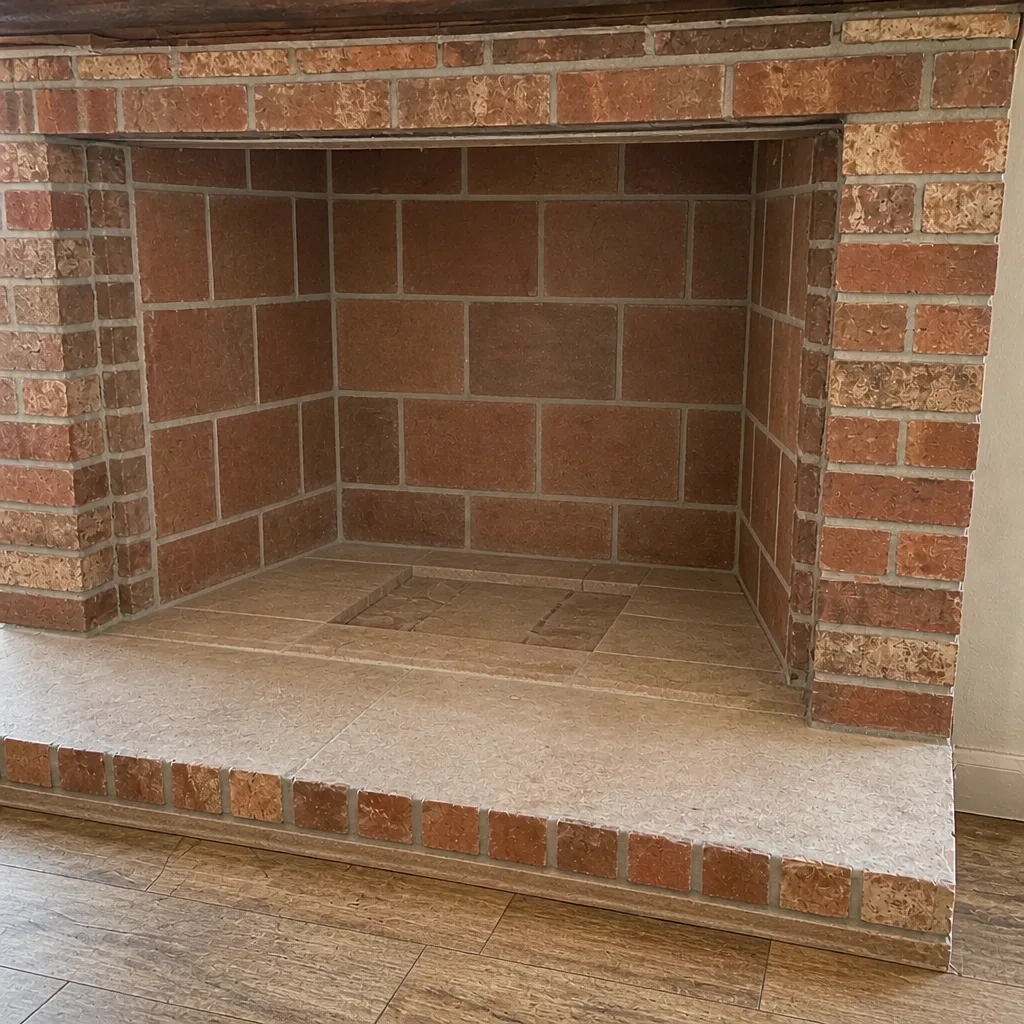
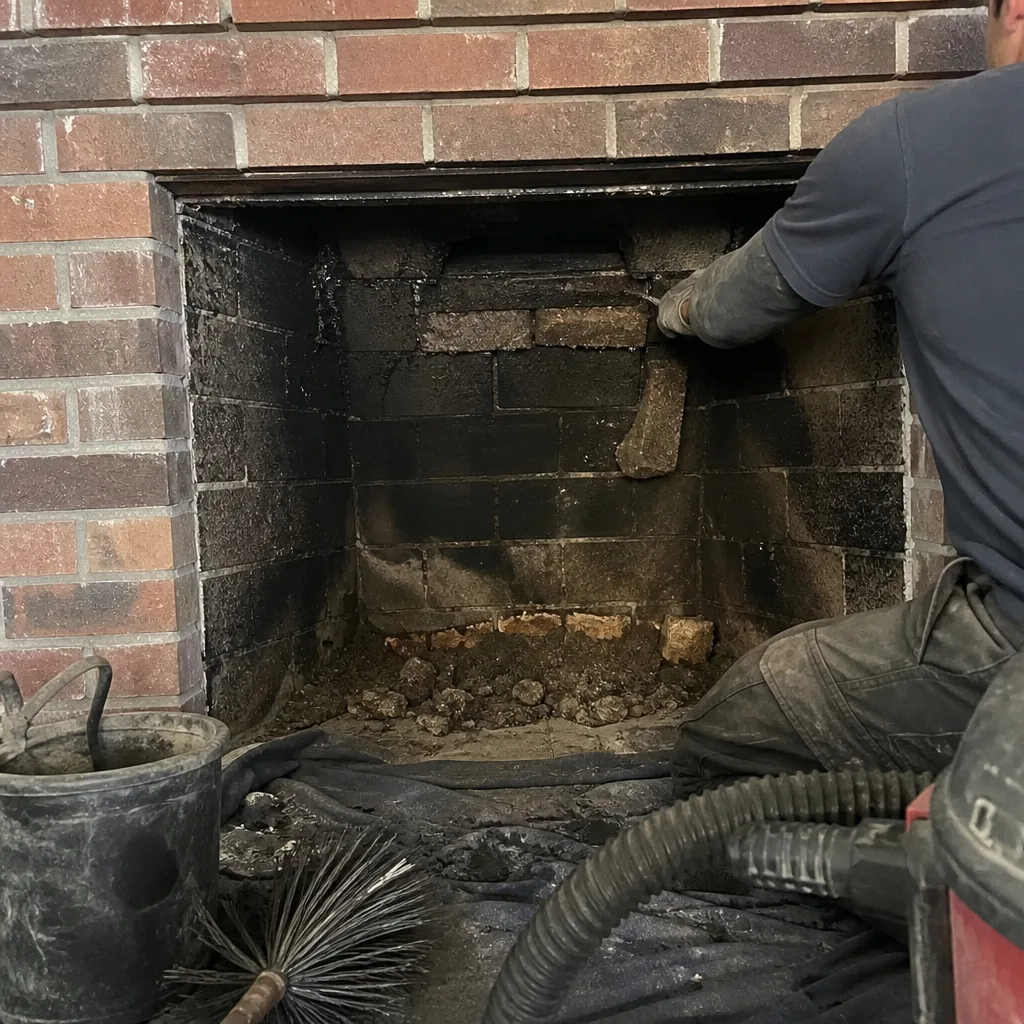
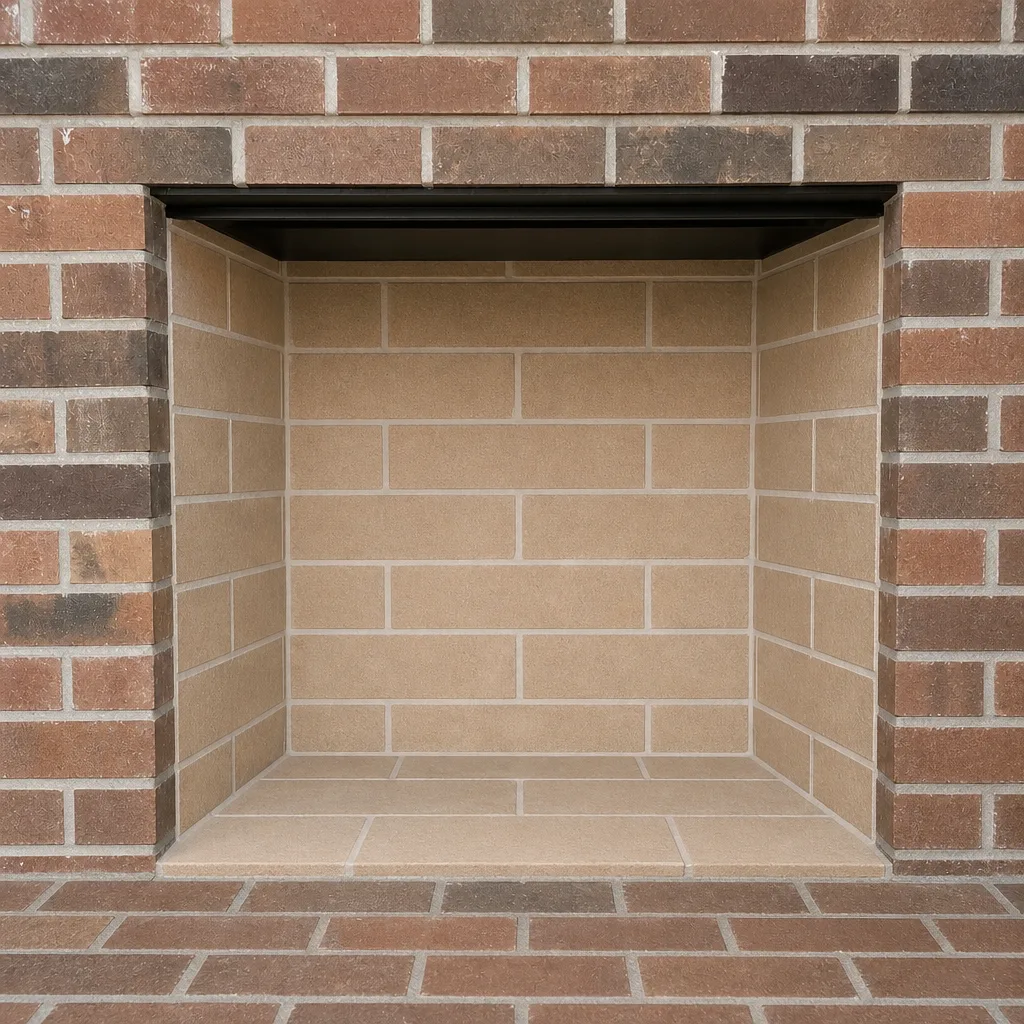
See the difference
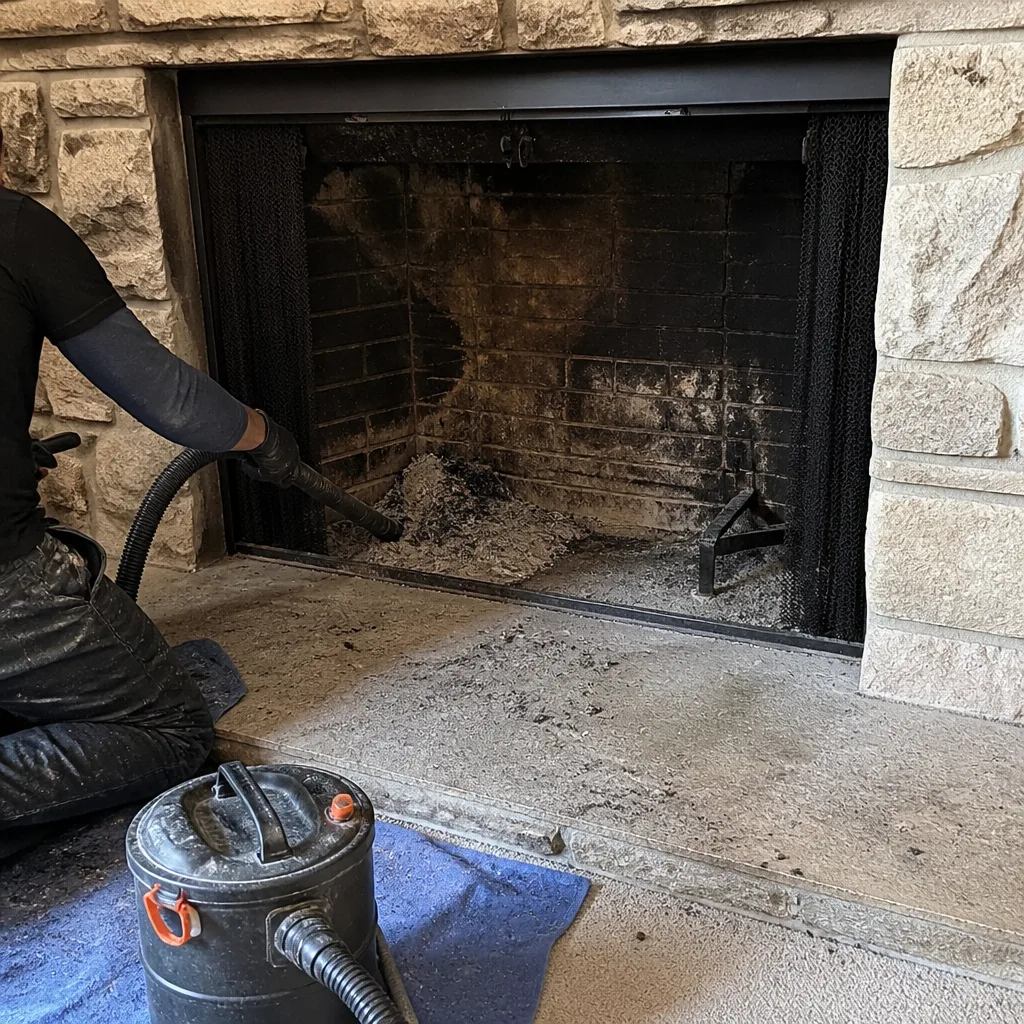 Before
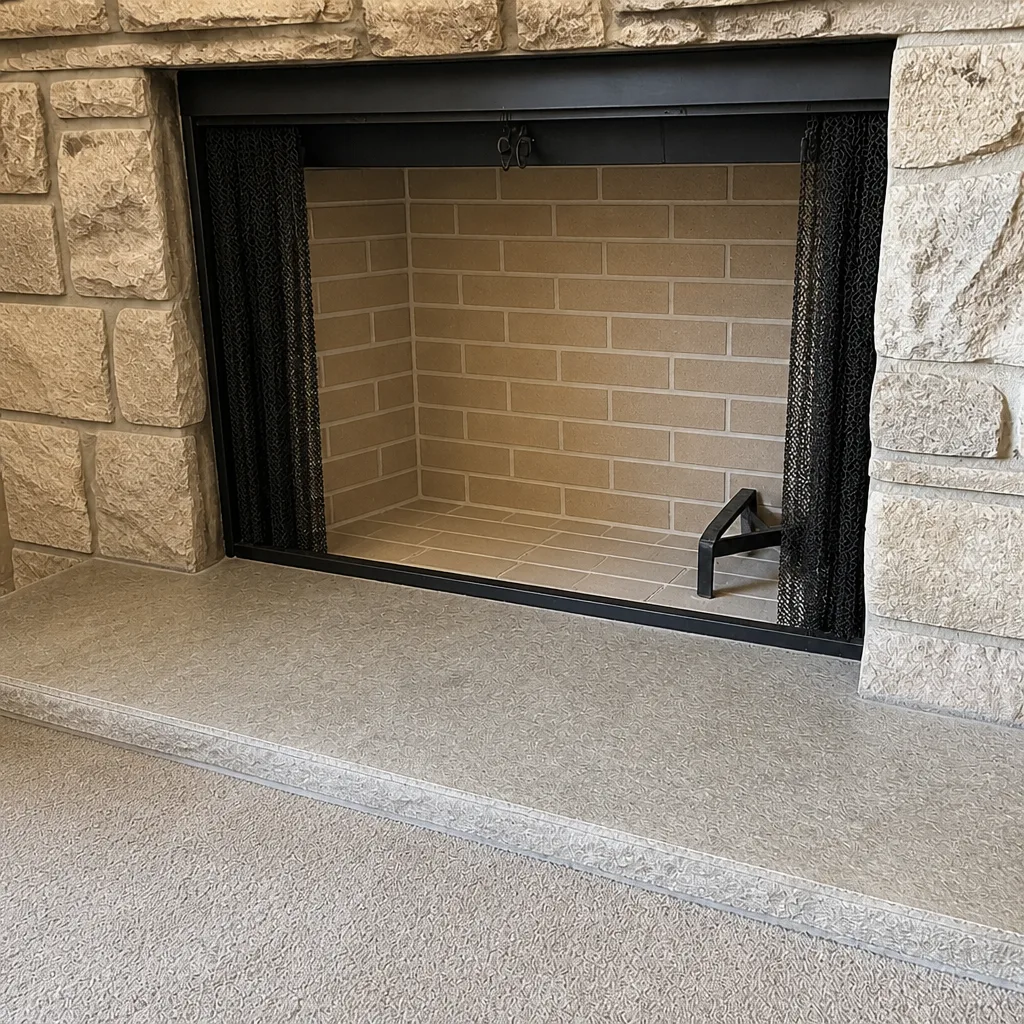 After
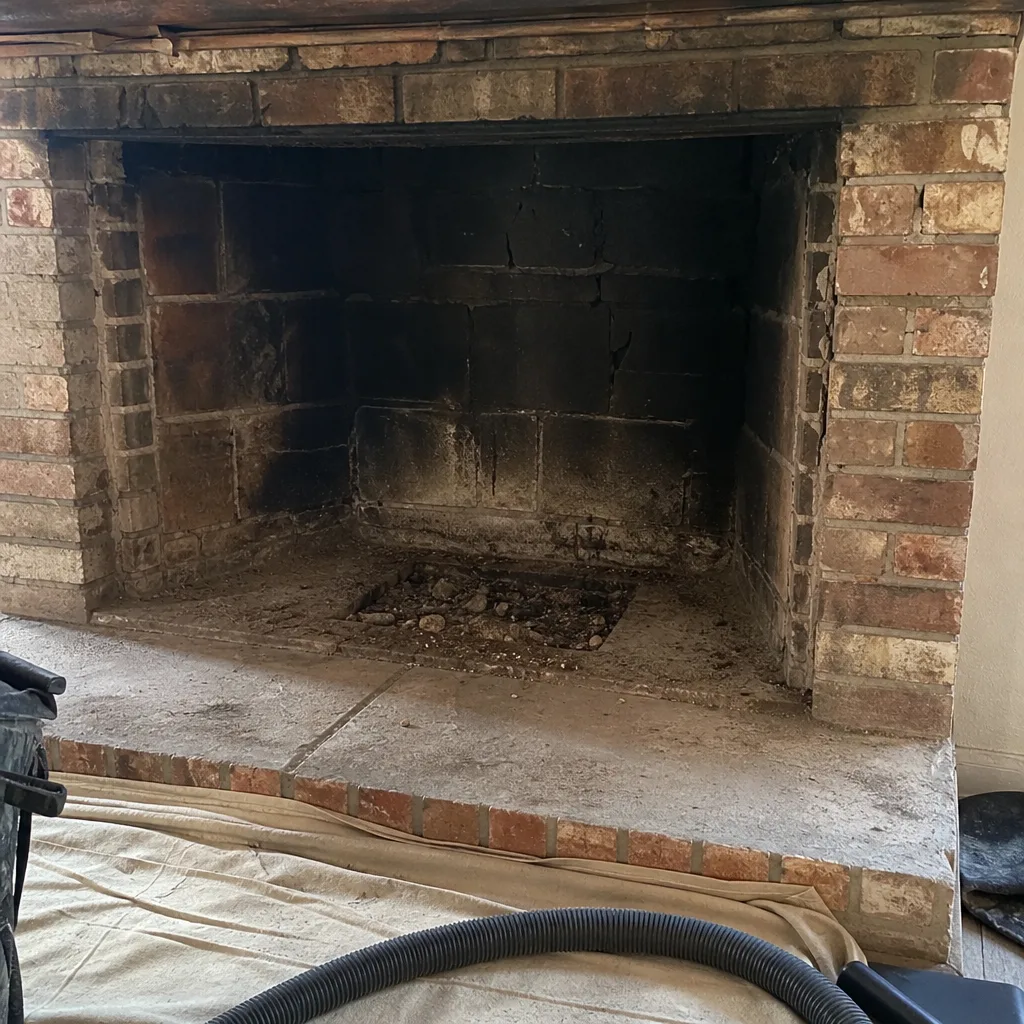 Before
 After
 Before
 After
When to Call a Professional
Call a professional before the burning season if you can’t recall your last inspection, if your home has a wood stove, if it’s more than twenty years old with a clay liner, or if you’ve ever noticed a hot smell around the chimney. Call the same day if you find cracked firebrick, a fallen piece of flue tile, a hot smell you can’t place, or a fire that doesn’t draw the way it used to. Call before you light up again if a chimney fire has ever been suspected, even briefly. Centennial Chimney Sweep Pros offers free estimates in Centennial. Call (866) 589-5349. We answer 24/7. Fast dispatch from 7am to 7pm, Sunday through Friday. From sweep to structural repair, one company and one report, so nothing gets cleaned without being seen.
Frequently Asked Questions
The price is set per job by a written estimate, and the estimate is free. Cost depends on the flue configuration, whether the creosote stage calls for rotary cleaning, and whether repair work is needed on the cap, crown, or liner. Call (866) 589-5349 for an exact quote for your home.
It depends on the flue condition, and the camera tells you which path is right. HeatShield restoration can address a deteriorating flue in many cases without a full tear-out, and it’s a different scope than a full stainless liner replacement, which uses a DuraFlex system. We don’t recommend either without images of the flue you can see yourself. If a restoration can safely handle the flue, that’s the repair we recommend. If the liner is beyond restoration, that’s the case for replacement. Call (866) 589-5349 for an exact quote.
For most Centennial homes burning a cord or more per season, an annual sweep and inspection is a sound baseline. Wood stove owners should treat that as a minimum. Light users with a known-good flue can stretch the interval, but not skip inspection entirely. The condition of the flue sets the interval, not a calendar rule. Call (866) 589-5349 to schedule a sweep for your Centennial home.
Creosote accumulates. Stage-one flaky creosote eventually hardens to stage two or stage three glaze, which burns hot and is the fuel behind a chimney fire. A cracked clay tile that goes unseen becomes a path for carbon monoxide into the home. And a failing crown lets water in, which slowly damages the masonry. None of those announce themselves early. Call (866) 589-5349 for a free estimate and get the flue condition documented now.
You can remove loose surface soot with a poly brush and rods if the chimney is already known to be in good repair. What you can’t do without the training and tools is inspect the flue interior, assess creosote stage accurately, access the smoke chamber, or judge the condition of a clay liner on camera. Cleaning without that assessment is a guess. Call (866) 589-5349 for a sweep that pairs the cleaning with the inspection.
Longer burn seasons, denser creosote from high-output wood stoves, aging clay tile liners in older homes, and a freeze-thaw cycle that stresses exterior masonry all push the risk higher than the average national picture. Centennial homes also often have original liners that haven’t been on camera in years. The camera inspection matters more here than in a milder climate. Call (866) 589-5349 for an exact quote and get the flue on camera.
The Bottom Line
Cleaning is the easy half. Inspection is the hard half, and in a working chimney you can’t clean well without seeing what you’re working on. If your flue is confirmed sound and you’re a light user, DIY brushing between professional visits has a real place. If you can’t confirm the condition of your liner, you’re spot-cleaning a system you haven’t assessed, and the DIY savings don’t cover the diagnostic gap. Our technicians have up to 8 years of experience reading Centennial flues, and we work with the brands the trade specifies, including Olympia Chimney, Gelco, and other professional-grade lines. We tell you what we find, and we fix it. Call (866) 589-5349 for a free estimate on your charcoal-burning system, and let the camera make the case.
Written by the team at Centennial Chimney Sweep Pros.