
HeatShield Chimney Sweep in Centennial: A Homeowner’s Guide
HeatShield applied over a flue with active mortar joint deterioration or unremoved glazed creosote will seal in the problem, not solve it. That distinction rarely shows up in product marketing, and it’s the reason a HeatShield job begins with a sweep, not a bucket of sealant. If you’ve been told your chimney needs liner work and you want to know whether HeatShield is the honest answer or an upsell, this guide walks through what the product actually does, what it can’t do, and how the prep work decides whether the repair lasts.
What HeatShield actually is (and what it isn’t)
HeatShield is an engineered resurfacing system for clay tile flue liners, not a paint-on patch. It’s applied to the interior of the flue to rebuild a smooth, continuous surface over cracked tiles and eroded mortar joints, and it cures into a hard ceramic-like lining. The industry treats it as a restoration method because it works with the existing tile structure rather than replacing it. Our technicians have up to 8 years of experience, and the ones who apply it describe the process as closer to plastering than to coating.
The system comes in two product lines, and they solve different problems:
- Cerfractory Flue Sealant is formulated for liners with cracks, surface spalling, and open joints where the tile itself is still structurally sound. It resurfaced the flue wall and seals the gaps.
- Joint Repair is designed specifically for the horizontal mortar joints between tiles, which is where most deterioration starts. It rebuilds those joints before or alongside the sealant work.
Neither product replaces missing tiles, rebuilds a collapsed flue, or corrects a liner that’s the wrong size for the appliance. Those are liner replacement cases. Knowing which category your chimney falls into is the entire decision. In Centennial, where a lot of homes were built with clay tile liners that have now seen decades of heating cycles, that call matters more than which brand of sealant goes on the wall.
Why the sweep before application is not optional
HeatShield bonds to what it’s applied over. If that surface is glazed creosote, soot film, or loose mortar dust, the sealant cures to the residue instead of the tile, and the bond fails early. This is the single most common reason a resurfacing job underperforms, and it’s entirely preventable.
Glazed creosote is the hard part. It’s the shiny, tar-like stage that forms after repeated hot burns with restricted draft, and it doesn’t brush off with a standard sweep. It has to be removed mechanically before any sealant touches the flue, and that’s a job for proper tooling and a technician who knows what they’re looking at. A surface that looks clean from the top can still hold a creosote layer the sealant will never grip.
So the sequence is fixed:
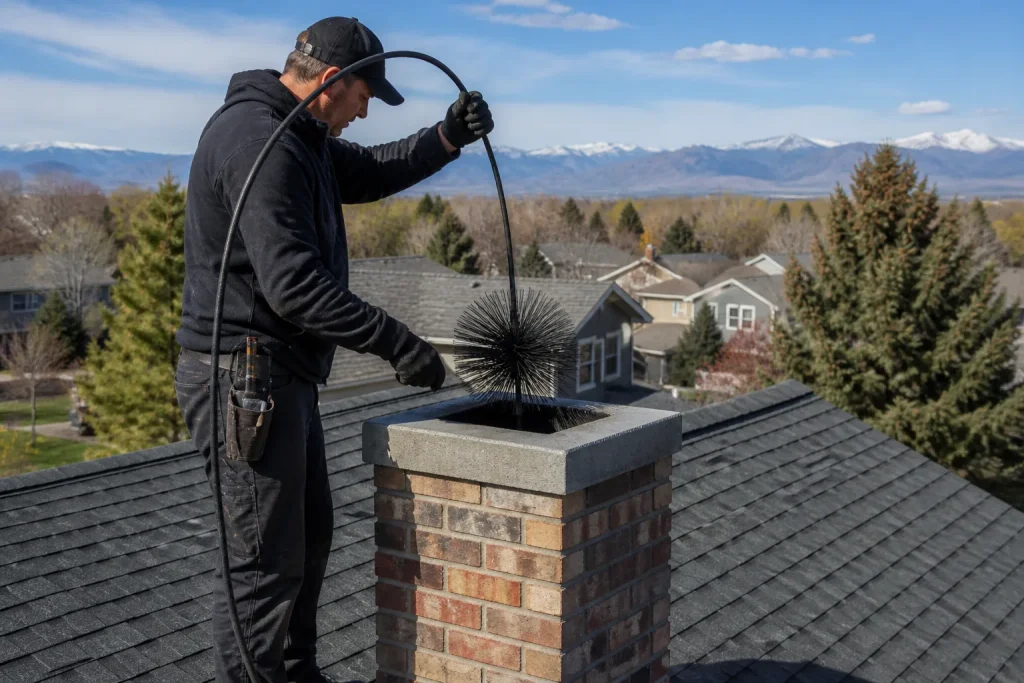
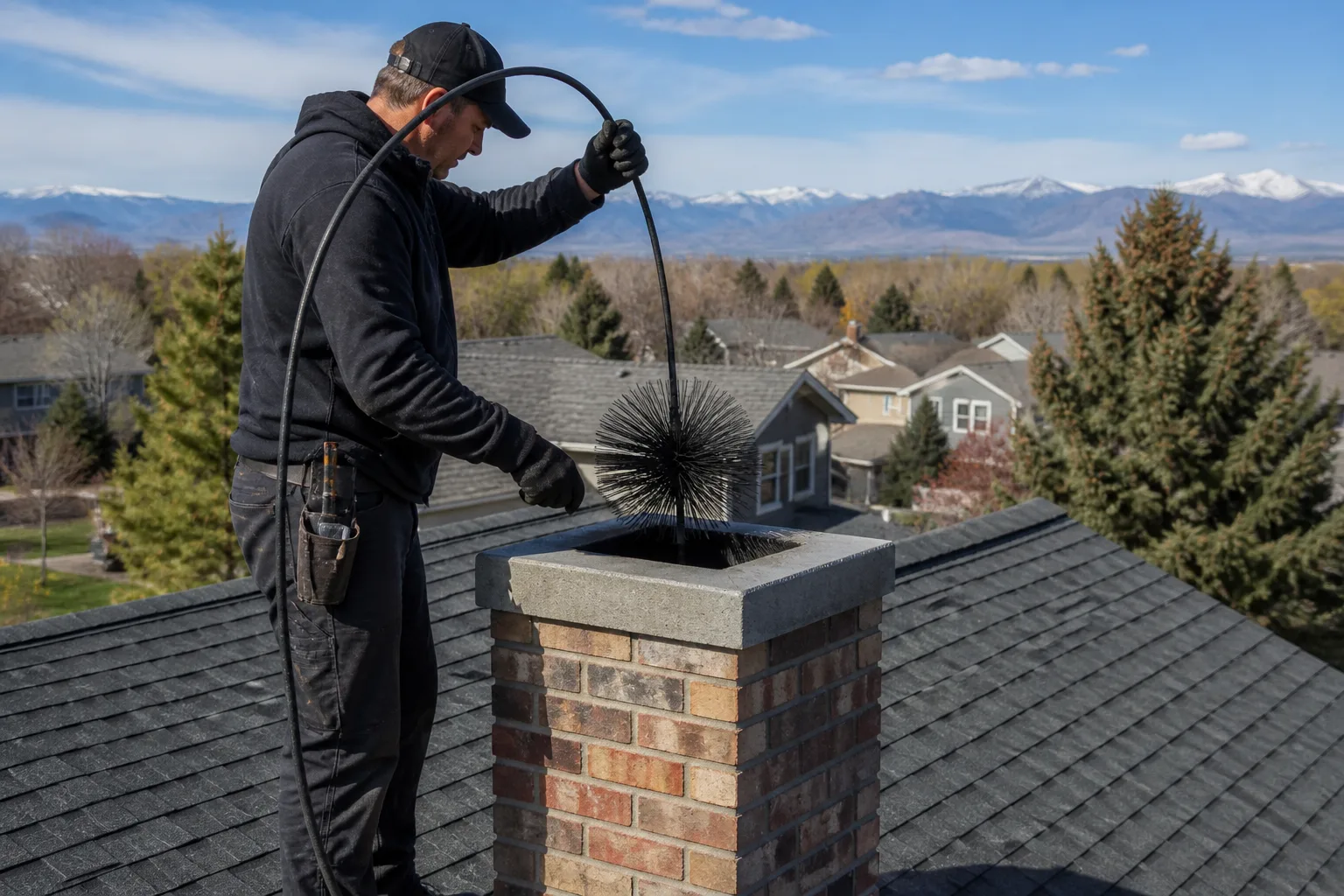
- Sweep the flue down to bare tile, removing all soot, creosote, and debris.
- Inspect the full interior with a camera to confirm the tile condition and joint integrity.
- Decide whether HeatShield is suitable or whether the flue needs replacement.
- Apply the appropriate product line and allow full cure time.
Any company that quotes HeatShield without a sweep and camera inspection first is guessing. In our experience, a proper chimney sweep in Centennial is the step that determines whether the restoration holds for years or fails inside two heating seasons.
Why Centennial chimneys see the joint damage they do
Centennial sits at roughly 5,500 feet, and the temperature swing between a July afternoon and a January night is enormous. Clay tile and mortar expand and contract at slightly different rates, and the joints between tiles take the stress. Over enough cycles, those joints crack, the mortar erodes, and the flue starts leaking combustion byproducts into the chimney structure.
Altitude adds a second factor: thinner air means appliances draft differently, and a flue that was marginal at sea level can run cooler here, which encourages creosote buildup. Together, the cycling and the draft behavior explain why joint deterioration is the most common finding in Centennial flues, and why Joint Repair is often the first product a technician reaches for. Tile cracking follows the joints, so addressing the joints early is what keeps a flue out of the replacement category.
The other thing Centennial homeowners ask about is the crown and cap. A cracked crown lets water into the masonry above the flue, and water is what accelerates joint failure from the outside in. If your chimney cap & crown is failing, no interior restoration will outlast the leak above it.
HeatShield or full liner replacement? How to tell
HeatShield is the right call when the tile is intact, the joints are deteriorated, and the flue is correctly sized for the appliance. It restores the liner without tear-out, which means less disruption to the chimney structure and no masonry rebuild. Full replacement is the honest recommendation when the tile is missing, the flue is offset or badly out of round, the liner is undersized for a modern appliance, or there’s a structural failure the sealant can’t bridge.
The comparison is straightforward once you have camera evidence:
- HeatShield fits – continuous clay tile with cracked joints, spalling surfaces, or gaps that need sealing, with the correct flue size.
- Replacement fits – missing tile sections, severe misalignment, an unlined flue, or a size mismatch that’s causing draft problems.
When replacement is the answer, we work with Centennial Chimney Sweep Pros standards and professional-grade liner brands like DuraFlex, sized to the appliance. The point isn’t to sell you the bigger job. It’s to tell you which one your chimney actually needs, because applying HeatShield to a flue that needs a liner is the expensive version of a wrong answer. Ask to see the camera footage. Any honest technician will show you.
What a proper HeatShield job includes, start to finish
A complete HeatShield application has a defined sequence and a defined cure period. The sweep and inspection come first, as covered above. Then the technician confirms suitability, mixes and applies the product, and finishes with a post-application inspection that verifies coverage, joint fill, and a smooth interior surface with no voids.
Cure time is not a suggestion. The system needs to dry completely before the first fire, and the manufacturer’s cure window depends on product line, humidity, and flue temperature. Lighting a fire early traps moisture in the lining and undermines the bond. Ask your technician for the specific cure time for your job and write it down. It’s usually the one detail homeowners forget by the time the first cold night arrives.
After the cure, a camera inspection confirms the surface is continuous and the joints are filled. From there, annual sweeps keep it that way. A restored liner is a system, not a one-time event, and it works best when the cap, crown, and flue all stay in condition together.
If your fireplace needs interior work alongside the flue, our fireplace repair service handles the firebox and damper side so the whole system is addressed in one pass.
What happens when you call
- 1
A real person answersNo phone trees – you reach a local pro.
- 2
You get an upfront price rangeHonest numbers before anyone is dispatched.
- 3
A background-checked tech heads outLicensed & insured, dispatched right away.
- 4
You approve before work beginsNothing starts until you say go.
When to call a pro
Call a professional if you see cracked or missing tile from the top, if a previous sweep left glazed creosote behind, if you smell smoke in the house when the fireplace isn’t running, or if you’ve never had the flue inspected with a camera. A flashlight from the damper shows you the first few feet. The rest is where the problems live.
Also call if a company quotes liner work without showing you the footage. You should be able to see what they see before you approve anything. If work can safely wait until spring, we say so. An honest assessment is worth more than an upsell.
The Bottom Line
HeatShield is a real restoration system, not a patch, but it only performs when the flue has been swept to bare tile and inspected for structural suitability first. In Centennial, joint deterioration is the most common finding, and Joint Repair plus Cerfractory Sealant resolves it when the tile is sound. When the tile isn’t sound, replacement is the honest recommendation. Camera evidence should drive the decision, every time.
If you’re in Centennial and need help, Centennial Chimney Sweep Pros offers free estimates. Call (866) 589-5349. We answer 24/7. Fast dispatch from 7am to 7pm, Sunday through Friday.
Frequently Asked Questions
No. Sealant applied over creosote or soot bonds to the residue, not the tile, and fails early. A sweep to bare tile and a camera inspection come first, every time. Call (866) 589-5349 for an exact quote, estimates are free.
A correctly applied HeatShield lining is designed to last for many heating seasons, and how long depends on the flue condition, the application, and whether the cap and crown keep water out. Annual sweeps protect the investment. Call (866) 589-5349 to schedule an inspection.
You must wait for the full cure time specified for your product line and conditions. Lighting a fire early traps moisture in the lining and weakens the bond. Your technician will give you the exact window. Call (866) 589-5349 with questions.
Camera inspection decides it. Intact tile with deteriorated joints points to HeatShield. Missing tile, misalignment, or a size mismatch points to replacement. Ask to see the footage. Call (866) 589-5349 for a free estimate.
Written by the team at Centennial Chimney Sweep Pros.
Need Chimney Cleaning Help?
Call Centennial Chimney Sweep Pros - the local pro we connect you with is licensed and insured, here with fast help in Centennial.
(866) 589-5349