
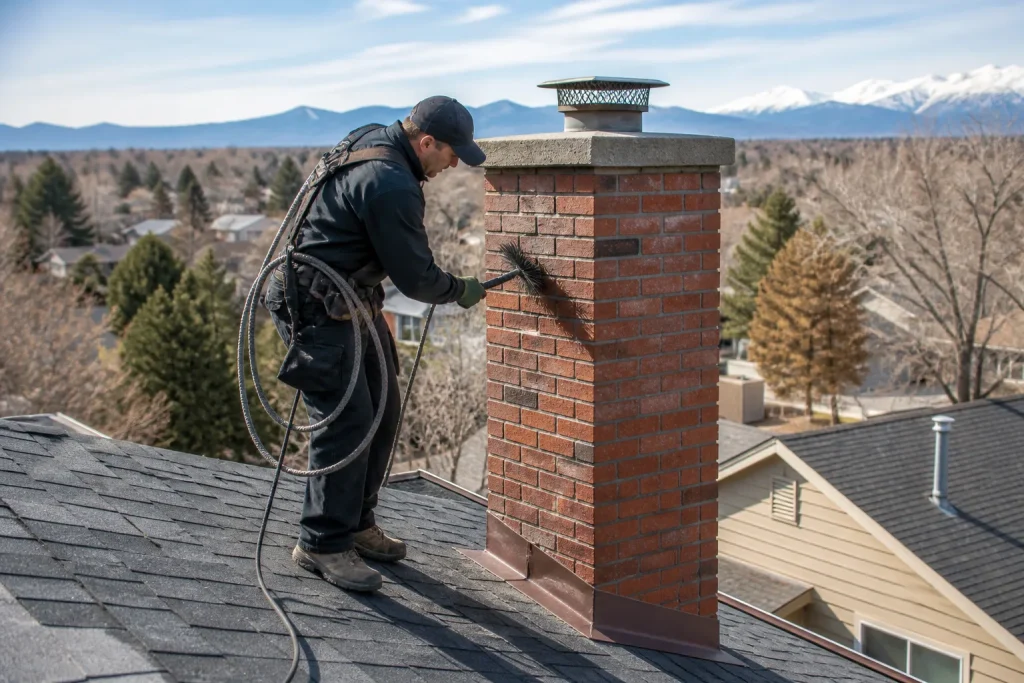
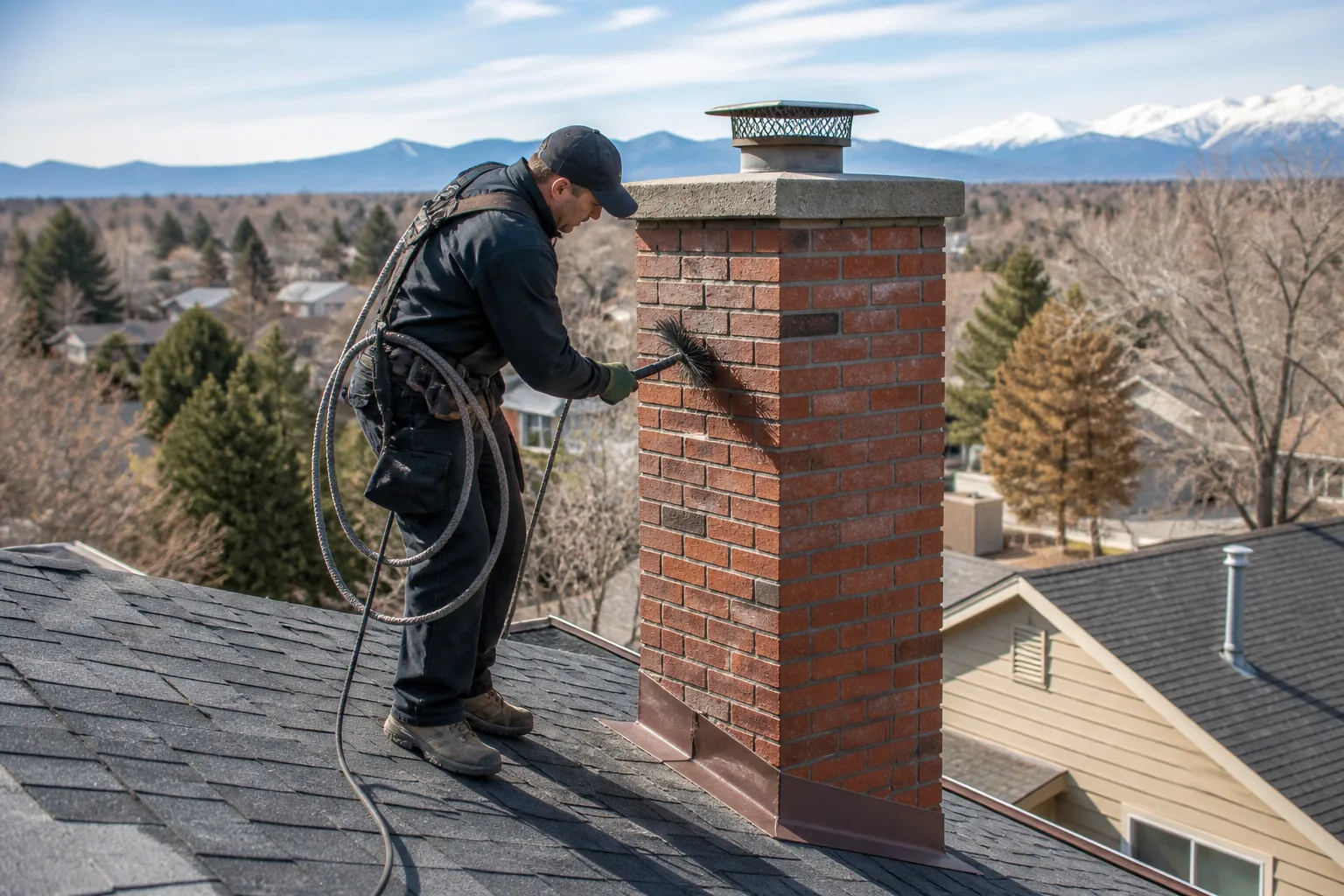
Chimney Sweep: Repair or Replace? How Centennial Homeowners Decide
There’s no single repair-or-replace line for a chimney. The right call depends on which component is failing, what’s causing the failure, and whether the fix addresses the cause or just paints over the symptom. A crack in a crown and a spalled flue liner are different problems with different solutions. The point of this guide is to walk you through the decision logic component by component, so when a contractor hands you a recommendation you can evaluate it instead of just accepting it. A contractor who recommends a full liner replacement without explaining why repair-grade products like HeatShield were ruled out hasn’t given you a recommendation. They’ve given you a sales pitch. If you’d rather have a trained eye look at it, call (866) 589-5349.
Key Takeaways
- Repair vs. replace is decided per component, not for the chimney as a whole.
- A Level 2 inspection with camera evidence is the minimum basis for any replace recommendation.
- Centennial’s freeze-thaw cycle is hard on crowns and mortar, so material choice matters as much as the repair itself.
- Ask what was found, what was ruled out, and why. A defensible answer is specific.
Why the Repair-or-Replace Question Isn’t One Decision
Your chimney is a system, not a single object. The flue liner, the crown, the firebox, the damper, and the cap all fail in different ways and at different rates. Treating the whole thing as one repair-or-replace call is where homeowners get talked into work they don’t need, or talked out of work they do.
Each component has its own failure modes:
- Flue liner: cracks, spalling, gaps at joints, and separation from the chimney walls. Repair-grade resurfacing is sometimes viable; structural deterioration is not.
- Crown: hairline cracks from thermal cycling and freeze-thaw, or full separation from the flue. Small cracks can be sealed; a failed crown needs rebuilding.
- Firebox: deteriorated mortar joints and cracked firebrick. Repointing is often enough; cracked firebrick sometimes needs replacement.
- Damper: rust, warping, or a failed seal. Usually a replace-not-repair item because the parts are inexpensive relative to labor.
- Cap: rust-through, missing mesh, or a cap that’s the wrong size for the flue. Almost always a replace item.
That’s five components with five different decision trees. A good sweep in Centennial will tell you which component they’re recommending work on and why, not hand you one blanket verdict. Our technicians have up to 8 years of experience, and the consistent thing we see is that vague recommendations are usually the ones that don’t hold up.
How Do You Decide Whether to Repair or Replace a Flue Liner?
Repair a liner when the damage is surface-level and the liner is still structurally sound. Replace it when the liner has lost structural integrity, when it’s unlined, or when the flue serves a newer appliance with different venting requirements than the liner was built for. Everything in between is where the judgment call lives.
Here’s the rough framework we use when assessing a liner:
- What kind of liner is it? Clay tile, cast-in-place, or metal. Each has its own failure signature and its own repair options.
- Where is the damage? Surface spalling and isolated joint gaps are different from longitudinal cracks running the length of a tile.
- Is the damage structural or cosmetic? A liner with surface flaking can often be restored; a liner with tiles that have shifted out of alignment cannot.
- What’s the appliance? A wood-burning fireplace has different liner demands than a gas insert or a wood stove.
- Can the repair be verified? If the proposed repair can’t be confirmed with camera evidence before and after, it’s not a repair you can trust.
HeatShield liner restoration is the option most sweep-only companies can’t offer. It resurfaced a deteriorating clay liner without a full tear-out, which is often the right answer when the liner is cracked but still in plane. DuraFlex is the answer when the liner is beyond resurfacing and a new stainless liner is the defensible choice. If a contractor skips straight to full replacement without mentioning resurfacing as an option, ask why. “It’s not a candidate” is a valid answer. “We don’t do that” is not.
What the Crown and Masonry Need in Centennial’s Climate
Centennial’s freeze-thaw cycle is the single biggest driver of crown and mortar deterioration in this area. Water gets into a hairline crack, freezes overnight, expands, and widens the crack. Then it thaws, and the cycle starts again. Over a few winters, a minor crown crack becomes a crown that’s shedding chunks. This is why the repair-versus-replace decision on masonry is often less about the current damage and more about whether the repair can survive the next ten freeze-thaw seasons.
Not all repairs are built for that:
- Mortar patches and caulk: temporary. They seal the crack now but don’t address the underlying stress that opened it.
- Crown coating systems: more durable than caulk and appropriate for hairline cracks, but not a substitute for a structurally failed crown.
- Full crown rebuild with a proper overhang and expansion joint: the durable fix when the crown has separated or cracked through.
- Repointing with correctly matched mortar: holds up when the mortar is compatible with the masonry; hard, modern mortar on old soft brick accelerates spalling.
This is where the Centennial name matters as a standard rather than a place. The right repair is the one that will still be in place a decade from now. A crown rebuilt with the wrong material or a mortar patch that fails after two winters wasn’t a repair, it was a deferral. When we look at a crown in Centennial, we’re looking at the water pathway that’s driving the damage, not just the visible crack. Calling it built to last isn’t marketing when the alternative is coming back next spring.
Why a Level 2 Inspection Is the Minimum Basis for a Replace Recommendation
A Level 2 inspection is the one that uses a camera to look inside the flue. A visual-only assessment from the firebox or the roof can tell you what’s visible from the outside; it cannot tell you whether the liner has a longitudinal crack on the far side, whether there’s a gap behind a tile joint, or whether there’s creosote glazing you can’t see from above. If a contractor recommends replacement based on a visual-only look, they’re recommending based on insufficient evidence.
This matters because the replace recommendation is the expensive one. It should come with the most evidence, not the least. What a defensible replace recommendation looks like:
- Photos or video from inside the flue, shown to you, not just described.
- A statement of what was found, and what was ruled out. Why wasn’t resurfacing viable? Why wasn’t a spot repair viable?
- A clear scope of what “replace” actually includes: liner, insulation, top plate, cap, crown work if needed.
- A written estimate that ties the scope to the findings.
A level 2 inspection is also what tells you when work can safely wait. Not every finding is urgent. A cracked crown with no water intrusion yet is a watch item; a separated liner on an actively used fireplace is not. We tell you which is which. When we recommend a chimney sweep and inspection in Centennial, the inspection is where the repair-or-replace decision actually gets made, not the sales conversation after it.
Questions to Ask Any Contractor Before You Accept a Recommendation
Ask these before you sign. The answers will tell you whether the recommendation is based on inspection findings or on default behavior. If a contractor gets defensive on any of them, that’s information.
- “Can I see the camera footage?” If they didn’t run a camera, they didn’t inspect.
- “What repair options were considered and why was each ruled out?” Resurfacing, spot repair, repointing, crown coating. A recommendation without alternatives is a default, not a decision.
- “Is this a root-cause fix or a symptom fix?” A crown crack from water intrusion is a symptom; the water pathway is the cause. Ask which one they’re addressing.
- “What happens if I wait six months?” A defensible answer has a safety judgment attached. “It might get worse” is not a judgment.
- “Which components are you recommending work on, and which are you recommending we leave alone?” If everything is a problem, nothing is a diagnosis.
- “What product line would you use, and why?” Olympia Chimney, Famco, and Copperfield are brands we work with because they’re what professionals specify. A contractor who names materials with a reason is more confidence-inspiring than one who names materials only when asked.
The whole point of asking is to convert a recommendation into a decision you understand. If the answers are specific, you’re talking to someone who actually assessed the chimney. If they’re fuzzy, you’re being sold to.
When to Call a Pro
Call when you have any of the following, because each is a signal that the component has moved past the point where a homeowner can assess it safely:
- Visible smoke or draft problems inside the room when the fireplace is running.
- Any sign of water intrusion around the chimney or in the attic near the flue.
- Crumbling mortar visible from the ground, or a crown that’s peeling away from the flue.
- It’s been more than a year since the last sweep and you burn regularly through the heating season.
Do not climb onto a roof to inspect it yourself, and do not reach into the firebox or flue to probe a liner. Chimney work involves height and heat and sharp surfaces, and a fall or a misjudged liner access is not worth the money you’d save. That’s a trained technician’s job.
We handle the full scope in one place, from the initial sweep and inspection through fireplace repair, chimney cap & crown work, and structural chimney repair. There’s no referral to a second contractor when the inspection turns up more than a sweep. Related services in Centennial: sweeping, inspection, liner work, and masonry. If you’d like to see what Centennial Chimney Sweep Pros offers, everything’s on the main page.
The Bottom Line
Repair vs. replace comes down to three questions, in this order. Which component is failing? What is it failing from? Will the proposed fix address that cause, or only the visible damage? If a contractor can’t answer all three with camera evidence and a clear scope, the recommendation isn’t ready to accept.
The liners, crowns, and fireboxes that hold up in Centennial are the ones that were fixed at the cause, with materials built for the climate. And when a component is genuinely past the point of repair, we say so. We tell you what we find, and we fix it.
If you’re in Centennial and need help, Centennial Chimney Sweep Pros offers free estimates. Call (866) 589-5349. We answer 24/7. Fast dispatch from 7am to 7pm, Sunday through Friday. Closed Saturday.
Frequently Asked Questions
A chimney sweep in Centennial typically runs in the low-to-mid hundreds of dollars, with the final price set by the written estimate. Price depends on the access, the flue configuration, and whether inspection is included. Call (866) 589-5349 for an exact quote. Estimates are free.
Only if the liner has lost structural integrity or was never suitable for the appliance. A cracked but intact clay liner can often be resurfaced with HeatShield rather than torn out and relined. The answer should come from camera evidence, not from a visual look. If you’re being told replacement without that evidence, ask to see it. Call (866) 589-5349 for a second opinion with photos.
At least once a year if you burn regularly, and more often if you burn heavily or use unseasoned wood. The annual sweep in Centennial is also the moment when a Level 2 inspection gives you the evidence base for any repair-or-replace decision for the coming year. Call (866) 589-5349 to book a sweep and inspection.
Creosote builds up on the flue walls and becomes harder to remove the longer it stays. Glazed creosote is combustible, which is why annual sweeping matters, and a chimney that hasn’t been swept in several years can also hide deterioration that only a camera will catch. Skipping it doesn’t create a same-day hazard, but it does remove the evidence you need to make good decisions about the chimney’s condition. Call (866) 589-5349 before the next heating season.
Written by the team at Centennial Chimney Sweep Pros.
Need Chimney Cleaning Help?
Call Centennial Chimney Sweep Pros - the local pro we connect you with is licensed and insured, here with fast help in Centennial.
(866) 589-5349