
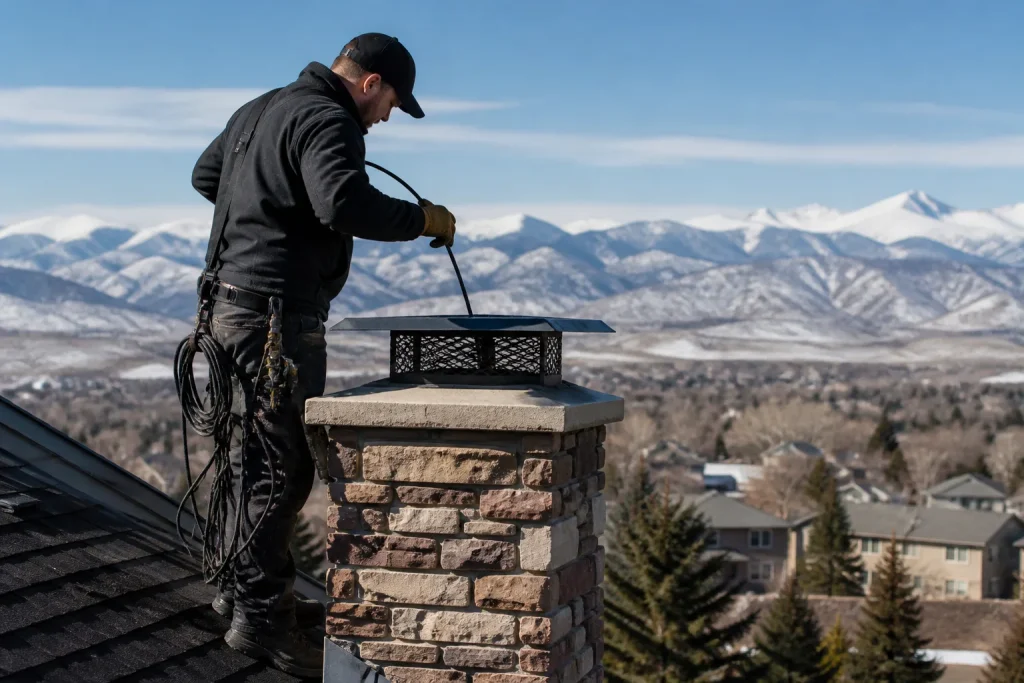
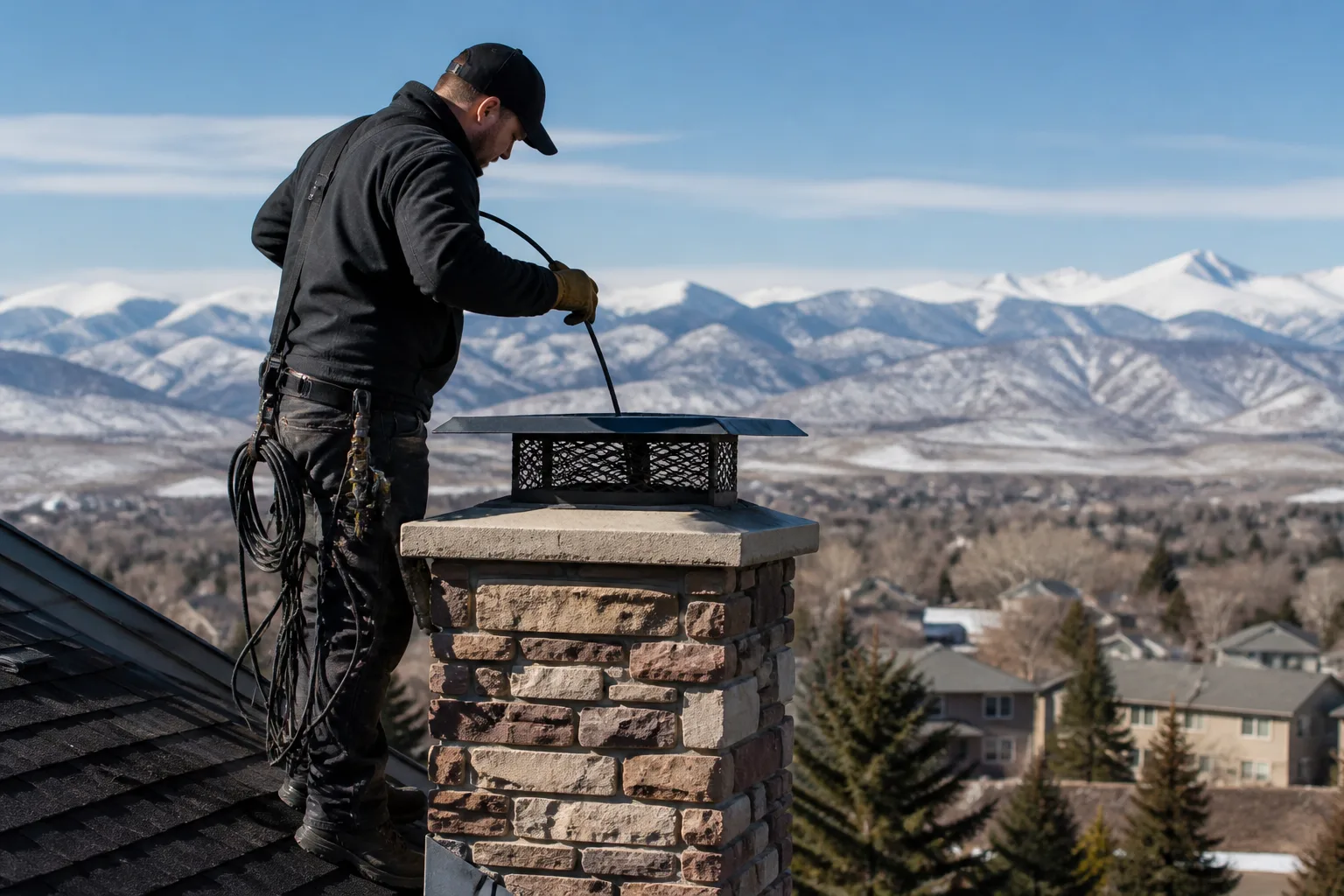
Emergency Chimney Sweep Near Me: What Centennial Homeowners Should Do First
Calling for an emergency sweep while the damper is still open and something in the firebox is still smoldering is one of the most common ways a manageable problem turns into a structural one. Before you search for the nearest number, the next twenty minutes matter more than how fast a technician can reach your door. What you do right now, and what you stop doing, shapes whether this ends in a cleaning or a repair. We’ll walk through the sequence in the order it actually needs to happen.
Start Here: The First Three Moves When Something Goes Wrong
If smoke is backing into the room or you suspect a fire inside the flue, close the damper first. That single move cuts the air feeding the chimney and stops the house from pulling more smoke indoors. Then ventilate: open a nearby window or door so the room can clear, and keep people and pets out of the immediate area. Get everyone outside if you see flames at the top of the chimney or smell a hot, acrid burn that doesn’t fade.
Here’s the order we give Centennial homeowners on the phone:
- Close the damper. Stop the draft before anything else.
- Ventilate the room. A window or exterior door clears smoke and gives you a clear head.
- Get out and look up. Step outside and check the top of the chimney for visible smoke or sparks.
- Call 911 if there’s fire. Flames, sparks, or heavy smoke from the chimney top mean the fire department, not a sweep.
- Call a sweep if it’s smoke or a blockage. Backdrafting, a stubborn smell, or a flue that won’t draw is a sweep problem, not a fire problem.
If you’d rather not work through this alone in the moment, call us at (866) 589-5349. We answer 24/7. Fast dispatch from 7am to 7pm, Sunday through Friday. A call outside dispatch hours is booked into the next opening.
Chimney Fire or Heavy Smoke Event? How to Tell the Difference
A chimney fire and a heavy creosote smoke event can look similar from the living room, and telling them apart changes what you do next. A real chimney fire is usually loud, sounds like a low roar or a train passing, and often throws a smell of hot metal or burning tar. A smoke event from heavy creosote is quieter. You get backdrafting, a strong sour smell, and smoke that rolls into the room without the sound.
What to watch for during a suspected chimney fire:
- Sound: a rumble, roar, or crackling from inside the flue.
- Smell: a sharp, hot, almost chemical odor that doesn’t clear when you ventilate.
- Exterior signs: smoke or sparks at the chimney top, or a chimney that feels hot to the touch from outside.
- Puffing: smoke pulsing back into the room in rhythm with the fire.
If you have roar, sparks, or heat coming off the masonry, treat it as a fire and call 911. A quiet smoke event with a strong creosote smell is a sweep call. When a specialist arrives, they can see which one it was from the creosote pattern and the condition of the flue. Our technicians have up to 8 years of experience reading exactly that evidence, and we tell you what we find.
Why You Should Not “Just Test It” After a Suspected Blockage
Lighting the fireplace to see if the problem cleared is the single most common mistake we hear about. After a suspected blockage or a small fire, the flue is holding loose debris, soot, and possibly cracked creosote. A test fire agitates all of it. Loose material lifts into the flue, the draft stalls, and now you have smoke and ash coming back into the room instead of up and out.
There’s a second reason: a flue that took heat stress may have a hairline crack you can’t see from the firebox. A test fire pushes hot gas through that crack into the chimney’s structure, which is how a small problem becomes masonry work. In our experience around Centennial, the fires that cause the most damage are rarely the big dramatic ones. They’re the small “let me check” fires lit a day after a scare.
If you’re not sure the flue is clear, leave the firebox alone and have someone look at it with a camera. That’s the safe way to test, and it gives you a photo record you can keep.
What to Have Ready When You Call a Sweep
The more accurate your description, the better the first visit goes. A sweep who knows what they’re walking into brings the right tools: a camera, rotary rods, a shop vacuum rated for fine ash, and the parts to fix what they find. Here’s what we ask Centennial homeowners to have ready:
- When it started. Was it during a fire, after one, or with the fireplace cold?
- What you see and smell. Smoke color, smell, and whether it’s coming from the firebox or the top of the chimney.
- Chimney type. Masonry or factory-built, and whether you know the liner material.
- Last sweep date. Even an approximate month helps establish creosote load.
- Any prior repairs. Caps, crowns, or liner work done in recent years.
That last point matters more than most people realize. A cap that’s come loose or a crown with a crack lets water and debris into the flue, which changes what a sweep finds. If your chimney has had chimney cap & crown work done, mention it. It tells us what to check first.
What an Emergency Sweep Covers, and What Comes After
An emergency sweep clears the blockage, removes the creosote that caused it, and confirms the flue is safe to use again. That’s the core of it. A camera inspection comes next, and the photo report shows you exactly what’s in the flue: creosote thickness, gaps, cracks, and the condition of the liner. Nothing gets recommended without that evidence.
What an emergency sweep doesn’t cover:
- Liner replacement. A cracked or deteriorated liner needs a separate scope and written estimate.
- Masonry repair. Spalled brick, cracked crowns, and damaged mortar joints are structural work.
- Liner restoration. A HeatShield liner restoration can sometimes address a deteriorating flue without a full tear-out, and it’s a service most sweep-only companies don’t offer.
We work with the brands professionals specify, including HeatShield for liner restoration, DuraFlex for liner systems, and Gelco and Olympia Chimney for caps and components. That matters because your chimney is a system. The sweep, the cap, the crown, and the liner all affect each other, and treating one without checking the others is how problems come back.
When to Call a Pro Instead of Handling It Yourself
Some parts of this are yours to do: close the damper, ventilate, get out, call 911 if there’s fire. Some parts aren’t. Creosote removal, flue inspection, and anything involving the inside of the flue belong to a trained professional. The firebox is not a place to improvise, and the flue is not something to reach into with a brush on a pole from the hardware store.
Call a pro if any of these apply:
- Smoke backed into the room and the smell hasn’t cleared.
- You suspect a fire, even a small one.
- You haven’t had the chimney swept in over a year of regular use.
- The firebox or chimney top shows damage, staining, or loose material.
- You smell creosote even with the damper closed.
Related services in Centennial: a standard chimney sweep handles routine cleaning, and fireplace repair covers the firebox, damper, and screen when those need work beyond the flue. For a full picture of what we do, start at Centennial Chimney Sweep Pros.
The Bottom Line
Emergency chimney problems in Centennial come down to sequence. Close the damper, ventilate, check outside, and know the difference between a fire and a smoke event before you call anyone. Then leave the test fire alone and get a camera inspection so you can see the evidence for yourself. Nothing gets recommended without it, and we’ll tell you plainly when work can safely wait.
If you’re in Centennial and need help, Centennial Chimney Sweep Pros offers free estimates. Call (866) 589-5349. We answer 24/7. Fast dispatch from 7am to 7pm, Sunday through Friday. A call outside dispatch hours is booked into the next opening, Sunday through Friday, 7am to 7pm.
Frequently Asked Questions
Close the damper first, then open a window or exterior door to ventilate the room. After that, step outside and check the top of the chimney for smoke or sparks. If you see flames or heavy smoke at the top, call 911. If it’s backdrafting or a blockage, call a sweep.
A chimney fire is usually loud, with a roar or crackling sound and a hot, acrid smell that doesn’t clear. A smoke event from heavy creosote is quieter, with backdrafting and a sour smell but no roar. If there’s any doubt, treat it as a fire and call 911. Call (866) 589-5349 for an inspection once the immediate danger has passed.
No. A test fire agitates loose debris and cracks in the flue, and it’s the most common way a small problem becomes structural. Leave the firebox alone and have the flue checked with a camera instead.
An emergency sweep clears the blockage and the creosote that caused it. It doesn’t cover liner replacement or masonry repair, and those are recommended only after a camera inspection shows you the evidence. Call (866) 589-5349 for a free estimate on what your chimney actually needs.
Written by the team at Centennial Chimney Sweep Pros.
Need Chimney Cleaning Help?
Call Centennial Chimney Sweep Pros - the local pro we connect you with is licensed and insured, here with fast help in Centennial.
(866) 589-5349